You are one of the good photographers in East Africa, working in Dar es Salaam, Arusha, Zanzibar or Nairobi. Clients come back, people tag you in their posts, and the wedding season keeps you busy. Then a bank, a hotel group or a fashion label plans its next campaign, and the brief goes to someone else.
When I look at photographers’ pages in the region, the gap I see most often is in how the work is presented. Often the pictures are good. What is missing is the brand around them, the part that tells a marketing manager she can trust you with a launch.
I have worked in branding, design and marketing for more than ten years, for lodges, safari companies, schools, fashion labels and events, and I have directed photo shoots for brands. Below are seven mistakes I see, why each one keeps the bigger client away, and how to fix it. To show what each fix looks like on a finished page, I use Luz Gémea, a campaign studio brand and website I created. The pictures in this article are campaign images from that website.
Your work lives only on Instagram
Instagram is a good place to be seen, and in Tanzania the audience is large. Meta’s advertising tools showed 4.10 million Instagram users in Tanzania in late 2025, according to DataReportal’s Digital 2026 report. Keep posting.
The trouble starts when Instagram is the only place your work lives. You do not decide who sees a post. Adam Mosseri, the head of Instagram, wrote in Instagram Ranking Explained that “Instagram doesn’t have a singular algorithm”, and that each part of the app ranks posts in its own way. Of Explore, one of the places where new people find you, he wrote: “Most of the content you’ll see in Explore is from people you don’t follow.” Whether a new brand manager sees your work depends on a ranking you cannot see.
An account can also be disabled. In August 2025, BNN Bloomberg reported that Facebook and Instagram accounts were being disabled “seemingly without reason”, with cases in Canada, the United States and the Netherlands. It quoted a business owner in Canada who told CTV News, “My Instagram page was basically the storefront of my business.”
A feed also has no room for what a brand checks before booking. How a shoot runs, when the pictures arrive, who owns them and how to send a brief do not fit in a caption.
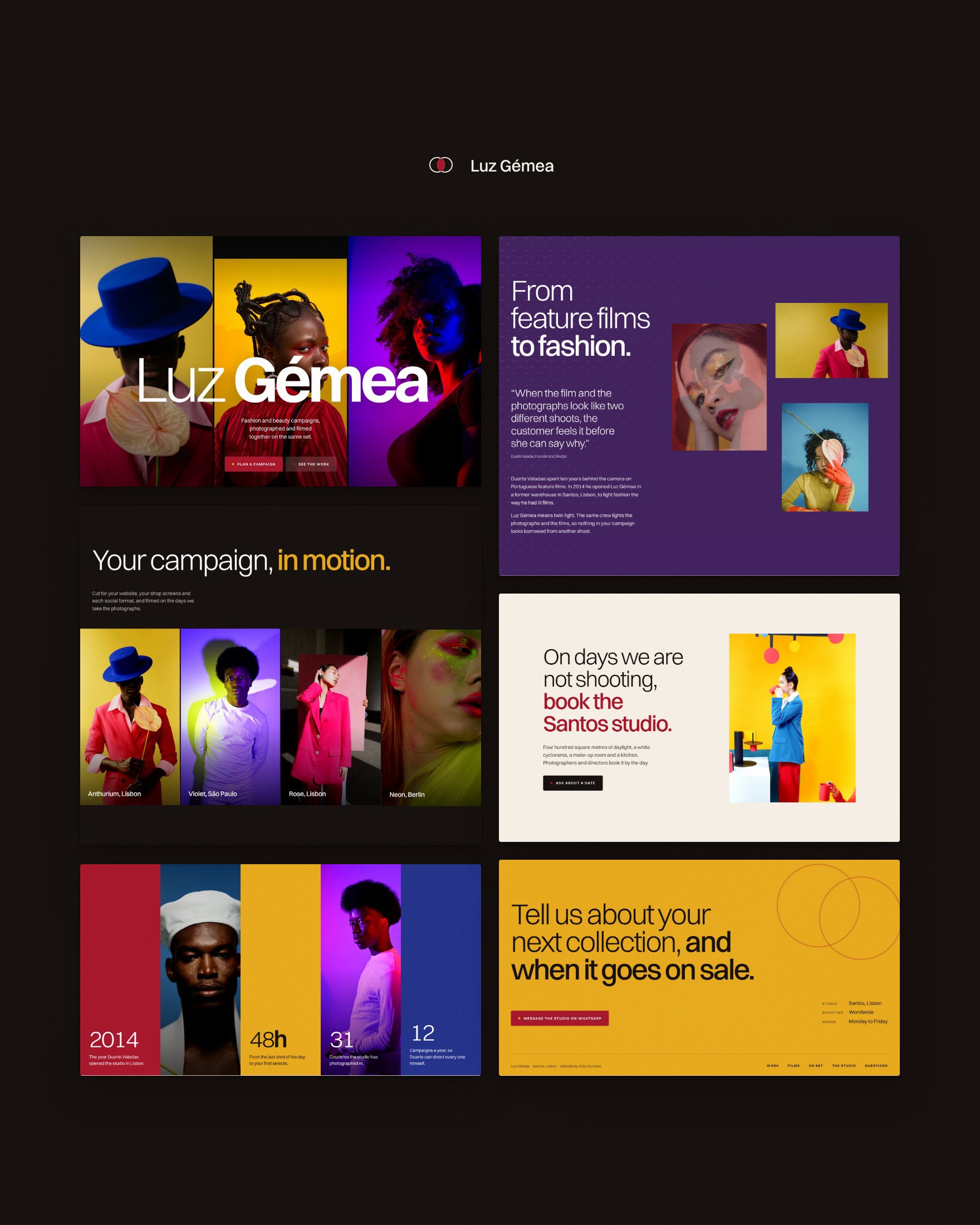
Put your work on your own website, at your own address, and let Instagram send people there. Put the link in your bio, and give every campaign you post a full page on the website. On Luz Gémea, the one page holds what a feed cannot: six campaigns with what each brand wanted, four films, the four steps of a shoot, the delivery times and five questions brands ask.
Your website is old or missing
After a friend recommends you, a brand manager may search your name before she writes. If she finds nothing, or a gallery from years ago with links that no longer open, she cannot tell whether you still work at that level.
She will not stay long either. In Wonderful Machine’s guide to curating a photographer’s website, photographer Patrick Heagney says, “It’s likely that any potential client is going to spend like 30 seconds looking at your site”. The same guide tells photographers to keep the retouching on their website “up-to-date with your current process”.
You can start smaller than you think. You do not need twenty pages. One strong page with your best campaigns, a few lines about you, how a shoot runs and how to reach you is enough. Luz Gémea is one long page. Add each new campaign when it is done, and check the site on your phone every time. My article on what an art director’s website needs goes through each section.
You shoot everything for everyone
Weddings pay well, and they are good work. When The Citizen spoke to photographers in Dar es Salaam for its article Behind the lenses, it found that most of their big earnings came from couples, from pre-wedding shoots and bridal showers to send-offs and weddings. One of them, Fahad Fuad, said an average wedding could pay him between Sh2 and 3 million.
The field is also crowded. “Currently, there are so many upcoming photographers in Nairobi, so we face a lot of stiff competition,” photographer Emmanuel Abugi told The Star in June 2026.
The result is a page that mixes weddings, birthdays, food, a company portrait and a fashion test. A marketing manager at a fashion label has to scroll past four weddings to find her kind of work, and she may stop at the second. The Wonderful Machine guide says being found by the right clients starts with “clear areas of specialization”.
Look at how the Kenyan artist Thandiwe Muriu sets out her work. Her Art page groups it into named series, such as CAMO. Her home page lists a festive campaign for Nespresso in 2025 beside her exhibitions.
Choose the clients you want more of, and make their kind of work the first thing anyone sees. Keep the rest on its own page, or on a second account. Luz Gémea does one thing, fashion and beauty campaigns photographed and filmed together, and the first line on the page says so.
Each shoot is edited a different way
A brand manager wants to know what she will get. If one set is warm and soft, the next is cold and grainy and the next has a heavy filter, she cannot tell which of the three will turn up for her launch.
The Wonderful Machine guide asks photographers to keep the retouching look “consistent across the entire website.” The same goes for how the work is shown. Five fonts on your posts, large watermarks across faces, collages and crops of every shape make good work look rushed.
Choose one way of editing for each kind of work and keep to it. Use two or three frame shapes, write short captions in one style, and keep your logo small or leave it off.
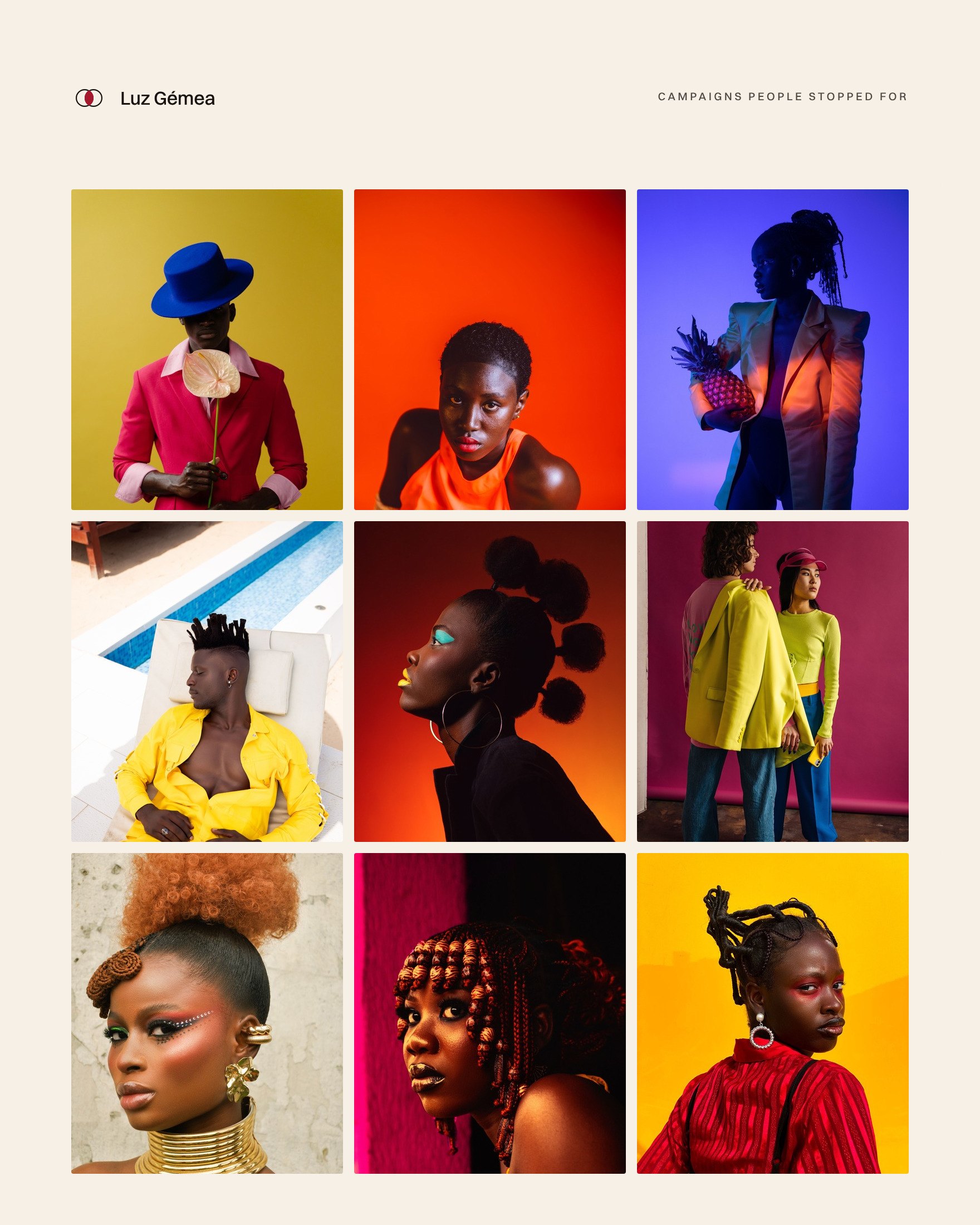
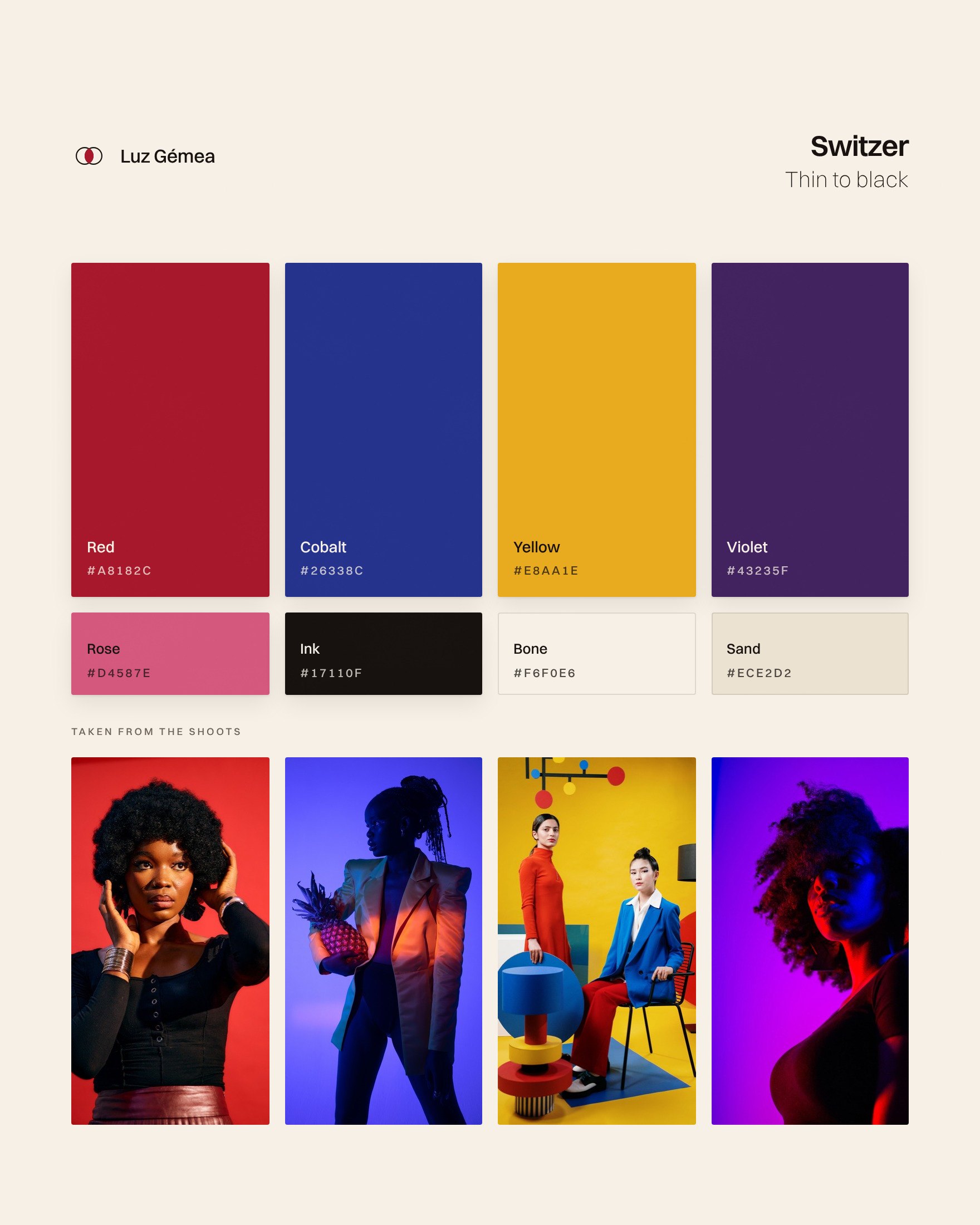
For Luz Gémea I set rules for every photograph before I chose one. Studio shoots only, with strong backdrops and real contrast. The model and what they hold stay fully in the frame, and no text crosses a face. The brand’s colours were then sampled from those photographs, so the page and the pictures look like they belong together.
AI pictures stand in for your own work
AI image tools can help you plan. A quick image can show a client the light or the colour you have in mind before the shoot. AI images become a problem when they sit in your portfolio as if you had shot them.
A portfolio tells a brand what you will deliver on the day. If she books you because of an AI image and your photographs look different, she will not book you again.
The platforms also mark these images. In 2024, Meta said it would add “AI info” labels to images, video and audio on its apps “when we detect industry standard AI image indicators or when people disclose that they’re uploading AI-generated content”, as its newsroom post on labelling explains.
People notice too. When Guess ran adverts with AI-generated models in the August 2025 issue of Vogue, people on TikTok criticised both Guess and Vogue. One fashion commentator, quoted by Good Morning America, said, “This doesn’t make me want to buy anything.”
Show only photographs you made. If you use AI for a mood board, call it a mood board. If you do not yet have work for the clients you want, plan a test shoot with a stylist and a model, and show that.
Nobody can see how you work
A brand has a launch date and a budget she has to explain to her boss. If your page says “DM for prices” and nothing about how a shoot runs, the only thing she can compare is the figure you send.
Some photographers say price is the hardest part. “The real problem is pricing,” a Nairobi street photographer named O’Brien told The Star. He said some newcomers charge very low rates: “You find someone charging almost half of what should normally be charged.” When your process is written down, a brand compares what she gets, and the price sits next to it.
Write your steps on the website. Say what happens after the first message, when the shoot is planned, what she receives and how soon. Then say what your price depends on, or give a starting figure. My article on prices on your website helps you choose.
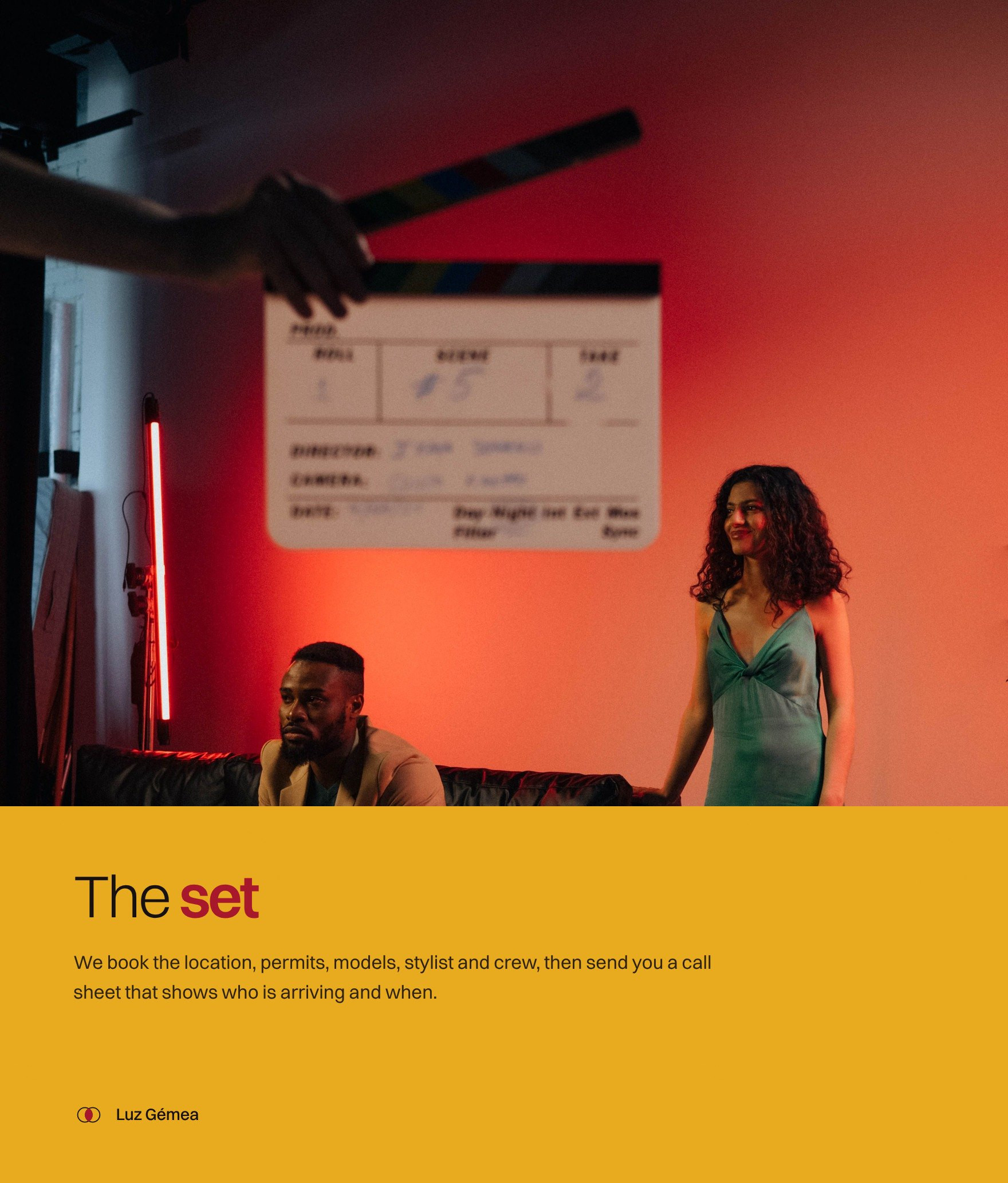
On Luz Gémea, a section called “From your first call to the final file” has four steps. The plan arrives in writing within a week of the first call, the first selects within 48 hours of the shoot and the final files within two weeks. The price answer names what the price depends on: the days on location, the size of the crew and the usage.
Nobody knows who you are
A brand books a person, and she wants to know a little about that person first: where you learnt, who you have worked for and the kind of work you care about.
In the same Citizen article, the photographer Mohammed Allarqya, known as Raqey, says his career started with a customer’s camera brought in for repairs at his father’s workshop. He also worked in a photo lab, where he printed the work of Mwanzo Milinga, the photographer who inspired him to make photography his career. That is the kind of detail a brand manager remembers.
Tim Walker’s home page does the same in a few lines. He worked as a photographic assistant to Richard Avedon in New York and shot his first story for British Vogue at 25.
Write 100 to 150 words about yourself. Say where you are based, what you shoot, how you started and who you have worked with, if they agree to be named. Add one photo of you at work. Then put a short version in your Instagram bio.
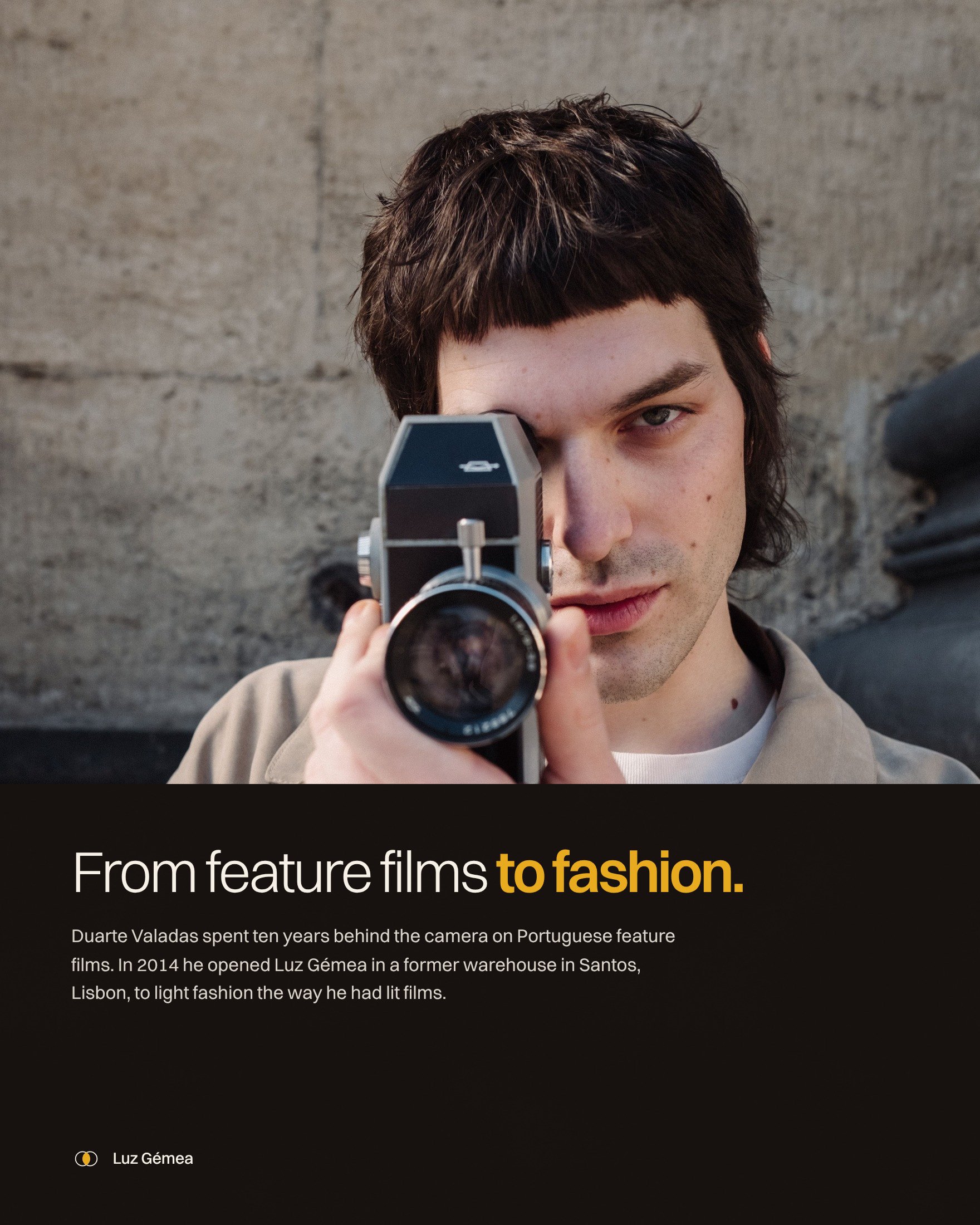
On Luz Gémea, the page gives the director’s story in two short paragraphs: ten years behind the camera on Portuguese feature films, then a studio in Santos, opened in 2014 to light fashion the way he had lit films. Four numbers sit under it, from the year the studio opened to the number of campaigns it takes on each year.
Check your brand this week
Go through this list with your phone in your hand:
- Your Instagram bio links to your own website, and the link opens.
- Your website shows work from the last year, and every page works on a phone.
- The first thing anyone sees is the kind of work you want more of.
- Every set is edited the same way, with the same frame shapes and caption style.
- Every image in your portfolio is a photograph you made.
- Your steps are written down, from the first message to the final files, with real timings.
- Your price, a starting figure or what your price depends on is on the page.
- Your About section tells a short story about you, with a photo of you at work.
Short answers on your brand
Do photographers in Tanzania need a website if they have Instagram?
Instagram is good for being found, and DataReportal reports 4.10 million Instagram users in Tanzania in late 2025. But you do not control who sees a post, and an account can be disabled. A website at your own address keeps your work, your process and your contact details in one place that stays yours.
How do I choose a niche as a photographer?
Start with the clients you want more of, and the work you already do well for them. Make that work the first thing on your website, and move the rest to its own page. You can add a second niche later, once the first one brings in work.
Can I use AI images in my photography portfolio?
Only if you say clearly what they are, for example a mood board. A portfolio tells a brand what you will deliver on the day, so it should hold photographs you made. In 2024, Meta said it adds an “AI info” label when it detects AI image indicators or when people disclose AI content.
Should photographers in East Africa show their prices?
Show a price, a starting figure or what your price depends on, such as the days, the crew and where the pictures will be used. A brand that can see this compares what she gets, and price stops being the only thing she can compare. My article on prices on your website covers the options.
What should a photographer’s About section say?
Where you are based, what you shoot, how you started and who you have worked with, if they agree to be named. Keep it to 100 to 150 words, and add one photo of you at work.
How much does a photographer’s website cost in Tanzania?
It depends on your pages, your content and where your business is. The services page lists my packages.