Should you use an AI website builder, or hire a web designer? Type a couple of sentences about your business into an AI tool and within minutes it hands back a website, with headings, photographs and a contact form. Set beside that, paying a designer and waiting days for a website needs a good reason.
The AI tools get their due here, because for some businesses they are the better choice. The answer comes down to what you get from each, and what your website has to do once it is live.
What does an AI website builder do well?
Speed comes first. You answer a few questions, pick a style, and the builder lays out the sections, drafts the text, adds stock photographs and publishes the page on its own hosting. For an owner who has never had a website, a whole page on screen within minutes is a relief.
Then there is the cost. Builders usually run on a monthly plan, and some have a free tier or a trial, so there is no quote to wait for and no meeting to book. You change the page yourself in its editor, whenever you like.
The best use of a builder is testing an idea. For a new offer, or a workshop you have not run yet, a page that costs little and goes up today shows you if anyone clicks before you spend more. Paying a designer to present an idea that may change next month is money spent too early.
Where does an AI builder stop?
A builder works from what websites in your category usually look like. Ask it for a coaching website and you get the sections coaching websites tend to have, in the usual order, with lines that would suit any coach. A competitor who types the same request gets something close to it.
What it can’t supply are the decisions that depend on your business:
- Which photograph opens the page. The first picture tells a visitor what you sell before they read a word.
- The opening line. It has to say what you do for this visitor, in words they would use themselves.
- The order of the sections. What a visitor needs to know first, where the proof sits and where the page asks them to get in touch.
- Your customers’ language. The words people type when they search for the problem you solve.
- Art direction. Type, colour and photography chosen for your business and kept consistent from page to page.
- The plan behind all of it. What the website has to get a visitor to do.
None of these comes from a prompt. Each depends on knowing who your best customer is and what they ask before they buy, information you hold and the software never sees.
A builder knows what websites in your category look like. It has never heard your customers ask their first question.
What a page plan decides before design starts
Every website I build starts with a short brief: who the site is for, the action you want from visitors and the pages that get them there. The first decision is which job your website does: enquiries, bookings, standing or being found.
From the brief comes a page plan, with the sections, their order and your copy laid out for you to read. Design starts once you have approved it.

For NAVA Events, an event planner’s website I designed, the brief was written before anything was designed. The page leads with the evenings themselves, explains the planning and decoration services, and ends in an enquiry form for the date, the venue and the number of guests. Each of those choices answers what a person planning an event needs to see, in the order they need to see it.
An AI tool skips the plan and goes straight to a finished-looking page, and a finished-looking page is hard to question. A plan is easy to change, and changing it costs nothing.

Who writes the words your customers will read?
An AI builder drafts your copy as part of the setup. It writes about your business in general terms, because general terms are all it has, and the draft needs your editing before anybody reads it.
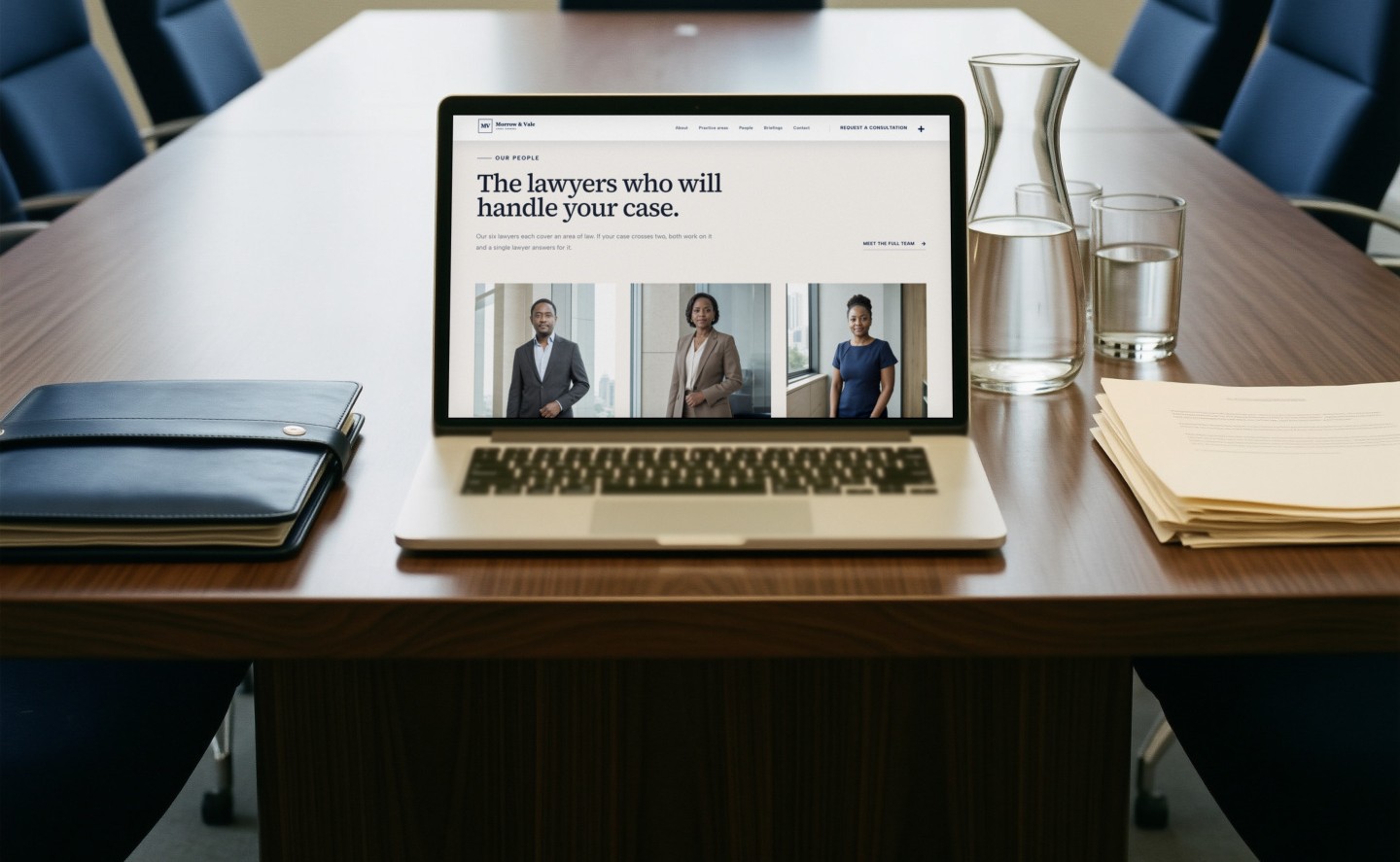
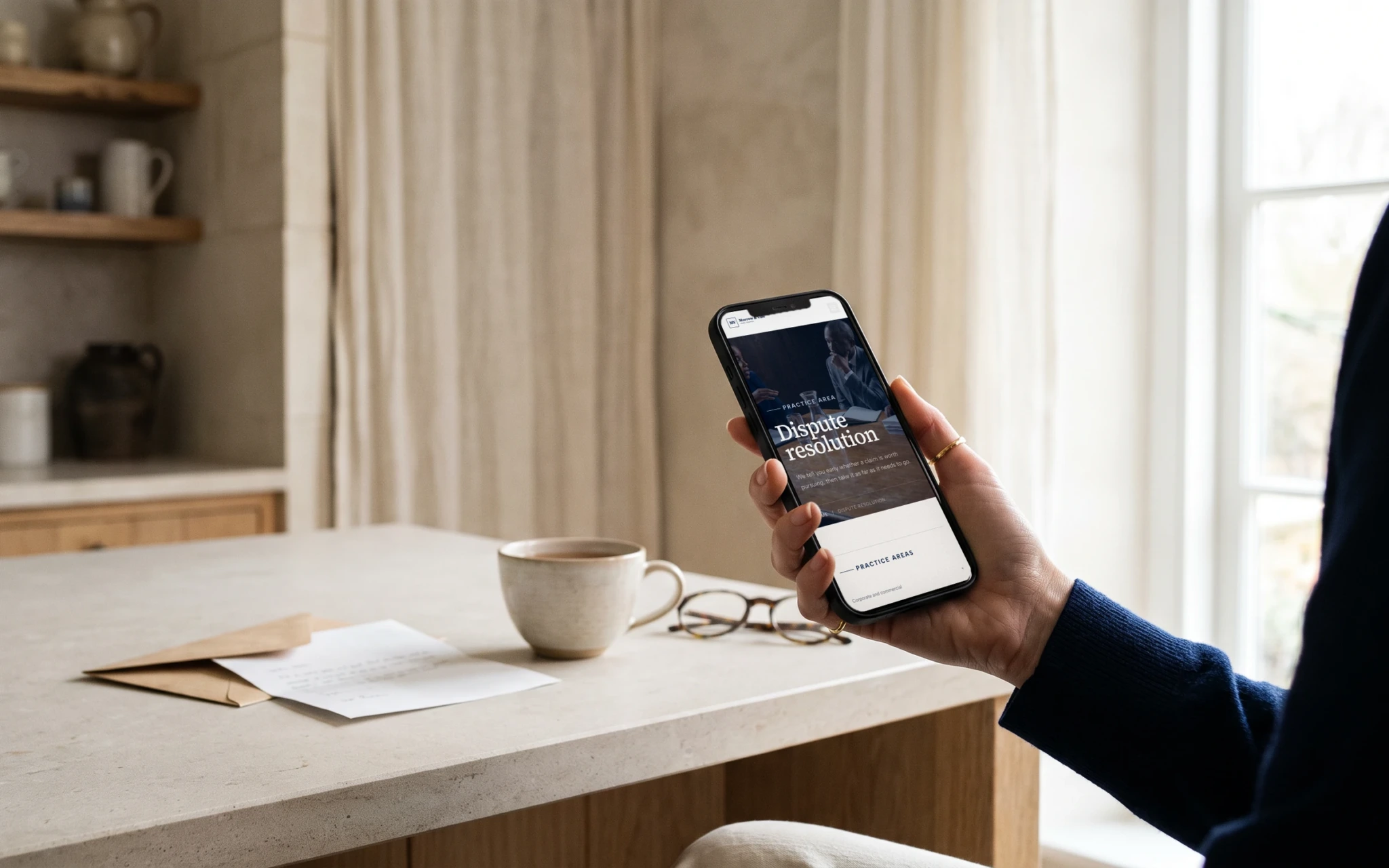
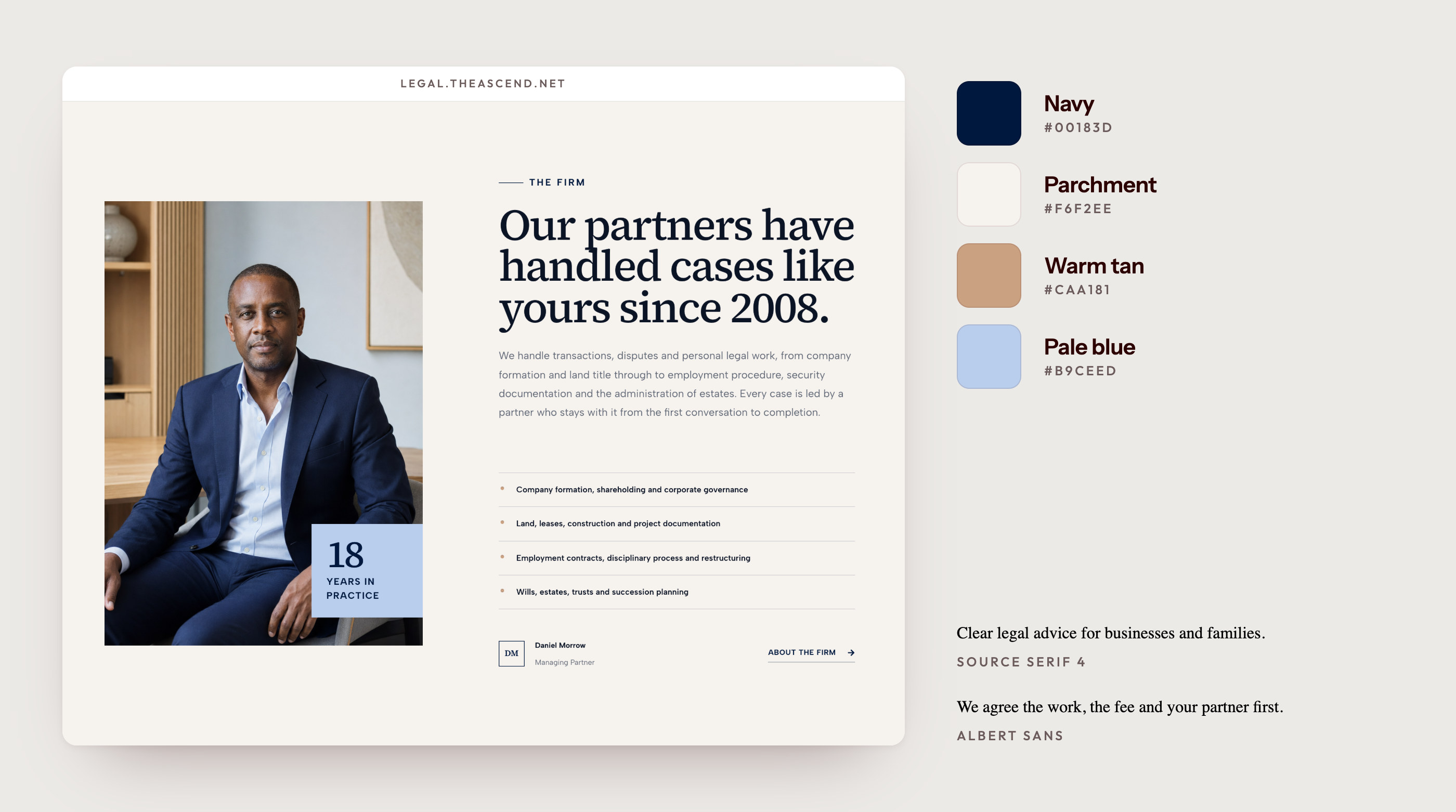
People search for their problem, in their own words. Morrow & Vale, a law firm, runs to eighteen pages because each area of law has a page of its own. Somebody in a dispute searches for the dispute, and a page written around it is the page that answers them.
On a website I build, the words come from you, because you know how your customers describe their problem. You send the approved copy before the build, it goes into the page plan, and every section is designed around it. Copy polish tightens the text you supply, from $175 for a single page, and new copy written from its own brief is quoted separately. The other material to gather is listed in what to prepare before a website project.
Who decides how your photographs and type look?
If you have paid for a brand identity and a photographer, a builder fits that work into its template. Your logo goes in the corner and your colours replace the template’s, while the layout, the type sizes and the way photographs are cropped stay close to how the template had them.
Art direction decides all of that for your business: the type, the colour, which photographs lead and the order they run in, all set up as a system you can keep using.
A template or an AI builder can’t make those choices for you, because both start from somebody else’s layout.
What you get from each, side by side
What each gives you, row by row:
| AI website builder | A website designed with me | |
|---|---|---|
| A first page | Within minutes of describing your business | A landing page built in 24 to 48 hours, once the plan and your material are agreed |
| What you pay | A monthly plan, sometimes with a free tier to start | An investment from $500, confirmed in a written quote |
| The plan | The sections your category usually has, in the usual order | A page plan you read and approve before design starts |
| The words | A draft written from your prompt, for you to edit | Your approved copy, placed in the plan, with copy polish if you want it |
| Photographs and type | The template’s layout, with your logo and colours added | Type, colour and photography chosen for your business |
| Where the site lives | On the platform that made it, with export on its terms | WordPress, static HTML or Canva, set up in your name |
The investment starts from $500 for a landing page built in 24 to 48 hours, and from $700 for a one-page website built in 48 to 72. A five-page website runs over five booked working days, from $1,350. Those build times hold because the plan and your material are agreed first, which the article on building a website in a day explains. Every launch is set out on the services page, and your written quote confirms the scope and dates before anything is booked.
Which should you choose for your business?
A builder is the sensible choice when the page has a short life or a small job:
- An offer you are still testing, where a cheap page shows you if anyone is interested
- A business in its first months, still deciding what it sells and to whom
- A page for a single event or campaign that comes down when it ends
- A presence you need this week, before any money is set aside for a website
A designed website is worth the investment when you have already invested in your brand and the website has to carry it. That covers the people I design for: consultants, coaches, speakers, law firms, schools, foundations and event planners. Their visitors compare them with others before getting in touch, and a page that answers the visitor’s first question in their own words gives them a reason to write.
You can also do both, in that order: a builder while the offer is new, then a designed website once you know what sells and who buys it. What you learn from that first page carries straight into the brief.
If you start with a builder, keep a running list of the questions people ask before they buy. When you move to a designed website, that list gives the page its order.
Questions people ask about AI website builders
Can an AI website builder match a web designer?
On looks, for a simple page that has to exist quickly, it can come close. It can’t make the decisions that depend on knowing your customers, such as what the page says first and the order it runs in.
Is an AI website builder cheaper than a designer?
At the start, yes. Builders usually run on a monthly plan and some have a free tier, while the investment in a website I design starts from $500 for a landing page, confirmed in a written quote.
Can AI write my website copy?
It will draft it, and the draft needs your editing, because it describes businesses in general terms. On a website I build you supply the approved copy, and copy polish is available from $175 for a single page.
Can I start with a builder and move to a designer later?
Yes. Check what you can export before you start, because some builders keep the design on their own platform. Your copy, your photographs and what you learned about your customers come across either way.
Can I edit a designed website myself?
Yes. A website I build is set up in your name, and at handover I show you the everyday edits on your own site and the settings to leave alone.