What is a bespoke website? It is a website planned around what your visitors need to do, then designed around your own words and photographs. A template starts from the other end: the layout exists first, and your business is fitted into it afterwards.
Is it worth the investment? That depends on what you have already put into your brand, and on what the website has to do for it. An owner testing a new idea can do well with a template. An owner with a name people recognise, a photographer’s invoice and buyers who compare has more to lose by looking like everybody else.
What does bespoke mean for a website?
In tailoring, bespoke means cut for the person who will wear it. On a website it means the decisions are made for your business before anything is designed: who the site is for, what a visitor should do next, and the order in which the page asks for it.
Those decisions become a page plan you read and approve. Art direction follows: type, colour and the order of your photographs, chosen for your business and set up as a system you can keep using. The layout is then drawn around your approved copy and the pictures you chose, so a paragraph keeps its length and a portrait photograph is never cropped into a wide strip.
The site goes on the platform that suits how you will run it, WordPress, static HTML or Canva, and it is set up in your name. I build on my own tested layout system and design every section on top of it. Visitors never see that code. They see the plan and the art direction, on every screen.
How is that different from a template?
A template is a finished design waiting for content. Somebody planned its sections for a business they imagined: a slogan over a wide photograph, three icons, a testimonial slider, a contact strip. You replace their placeholder text and stock pictures with your own.
The trouble starts where your business differs from the imagined one. A paragraph that needs four lines is cut to two because the box holds two. A portrait is cropped to fit a wide slot. A section you have no use for stays, because removing it breaks the spacing around it.
A theme with your logo dropped in is the same design wearing your colours. It looks finished on the first day, and a visitor who has seen that theme on another site recognises it.
A theme with your logo dropped in is the same design wearing your colours.
Can an AI website builder do the same job?
An AI builder writes and lays out a page from a short prompt in a few minutes, and for testing an idea that speed is useful. It writes from what businesses like yours usually say, so the page sounds like them. What it can’t know is the question your clients ask first, or which of your photographs makes people want to book, and on a bespoke website those two answers shape the first screen. I compare the two in full in AI builder or a designer.
| Template or AI builder | Bespoke website | |
|---|---|---|
| The plan | The sections it came with | Agreed with you before design starts |
| The words | Cut to fit the boxes, or generated | Your approved copy, with the page laid out around it |
| The photographs | Cropped to the slots | Chosen and ordered first, and the layout follows |
| Type and colour | Your logo colour on its typefaces | Chosen for your business and kept as a system |
| Where it lives | On the seller’s or the builder’s terms | On your platform, in your name |
| Time to launch | Minutes to days | A day to a week of build, once the plan is agreed |
When is a template enough?
Often, and it is better to know that before you invest. A template is enough when:
- You are testing an idea and don’t know yet whether people will pay for it.
- The site only shows the basics: your opening hours, your address and your phone number.
- The page is for a short campaign that comes down within weeks.
- You have no photographs and no final words yet, so a designer would have nothing to design around.
A well-made template also beats a badly made custom site. If money is tight, put it into photography and clear words first. Both move with you to a bespoke site later, and the rest of what to gather is in preparing for a website project.
When is bespoke worth the investment?
When you have already invested in the brand and the website is where buyers decide. Somebody comparing three firms in three browser tabs judges you on the page before they ever speak to you. If your photographs are good and your reputation is earned, the website has to show both from the first screen.
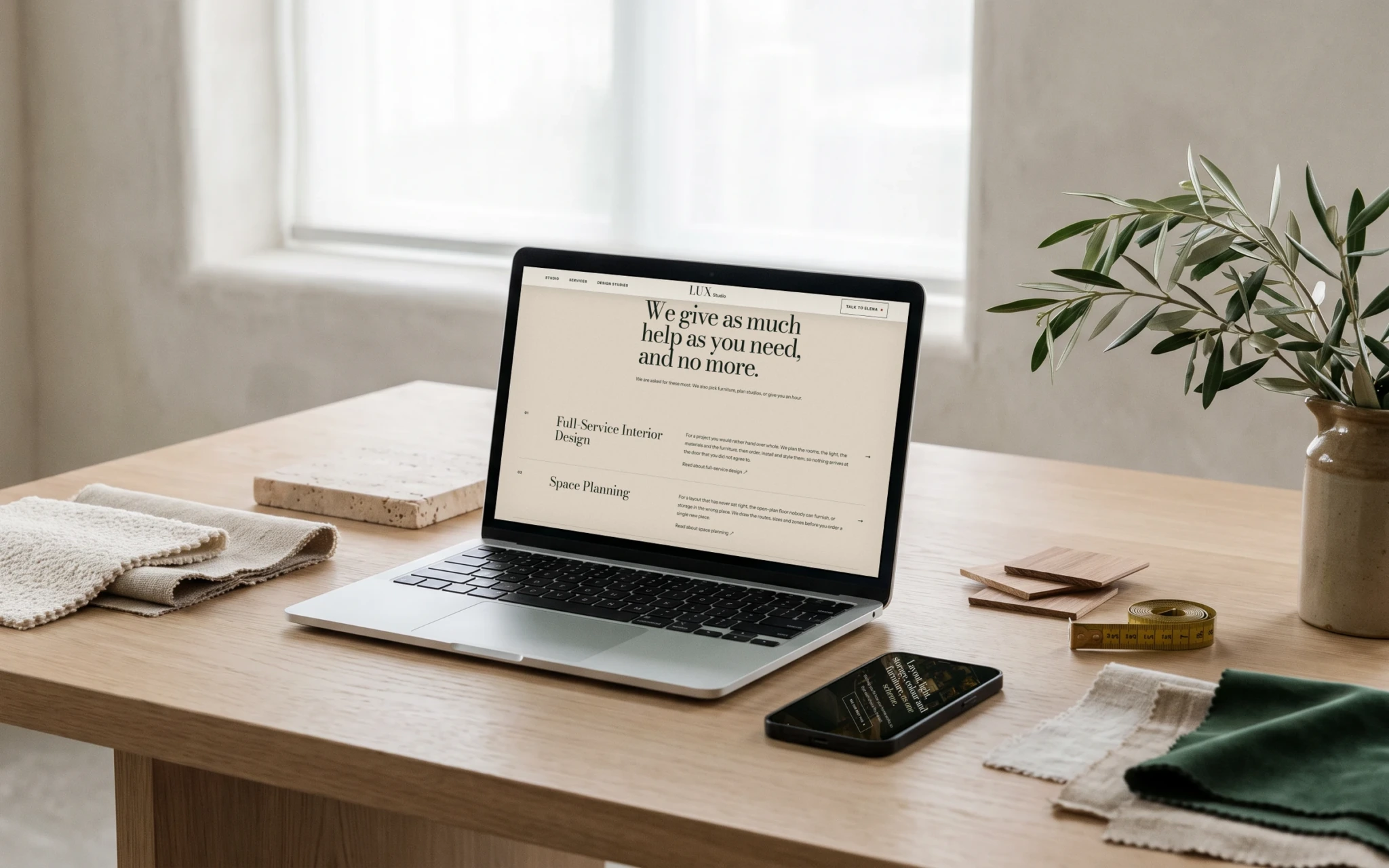
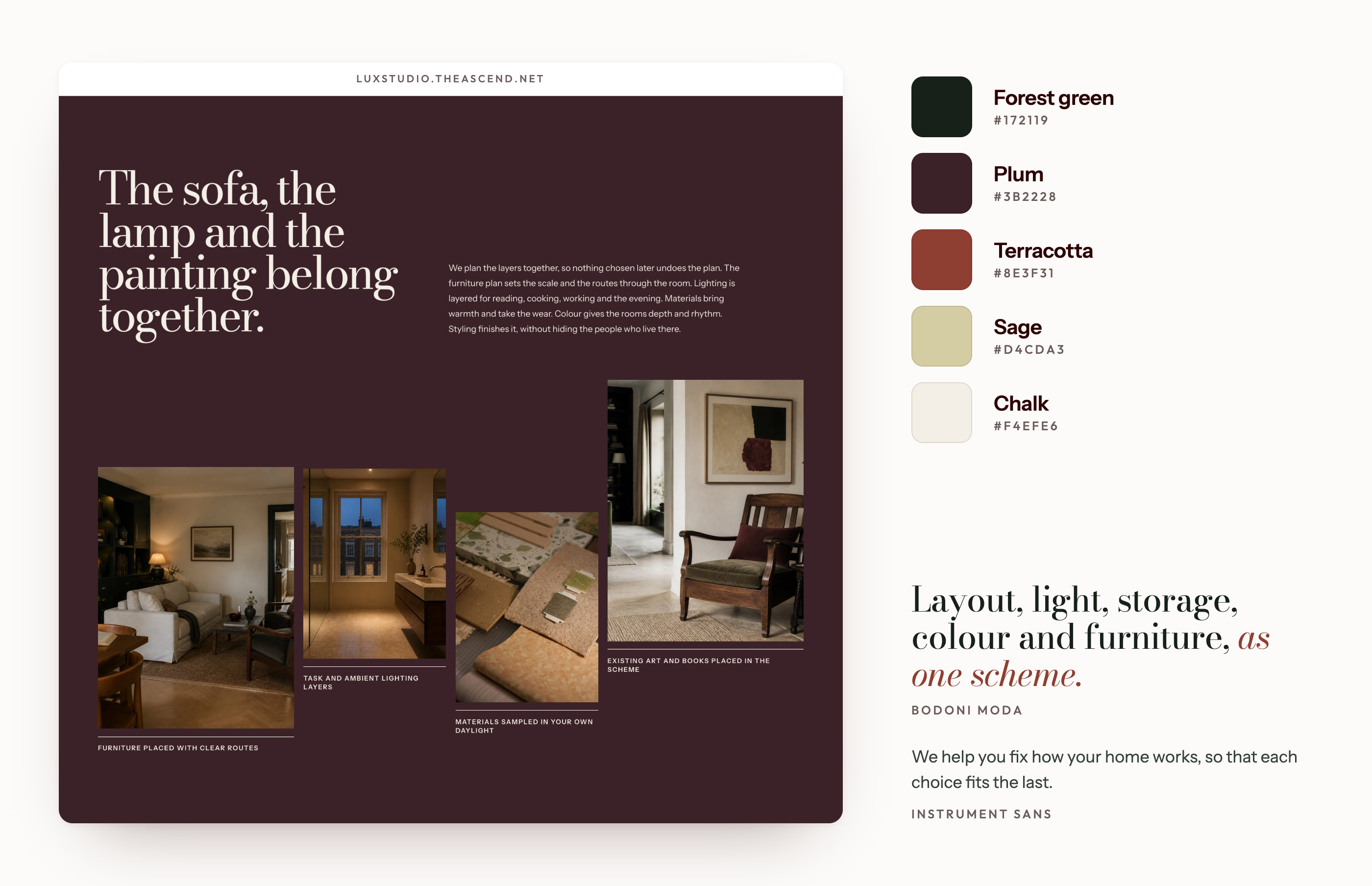
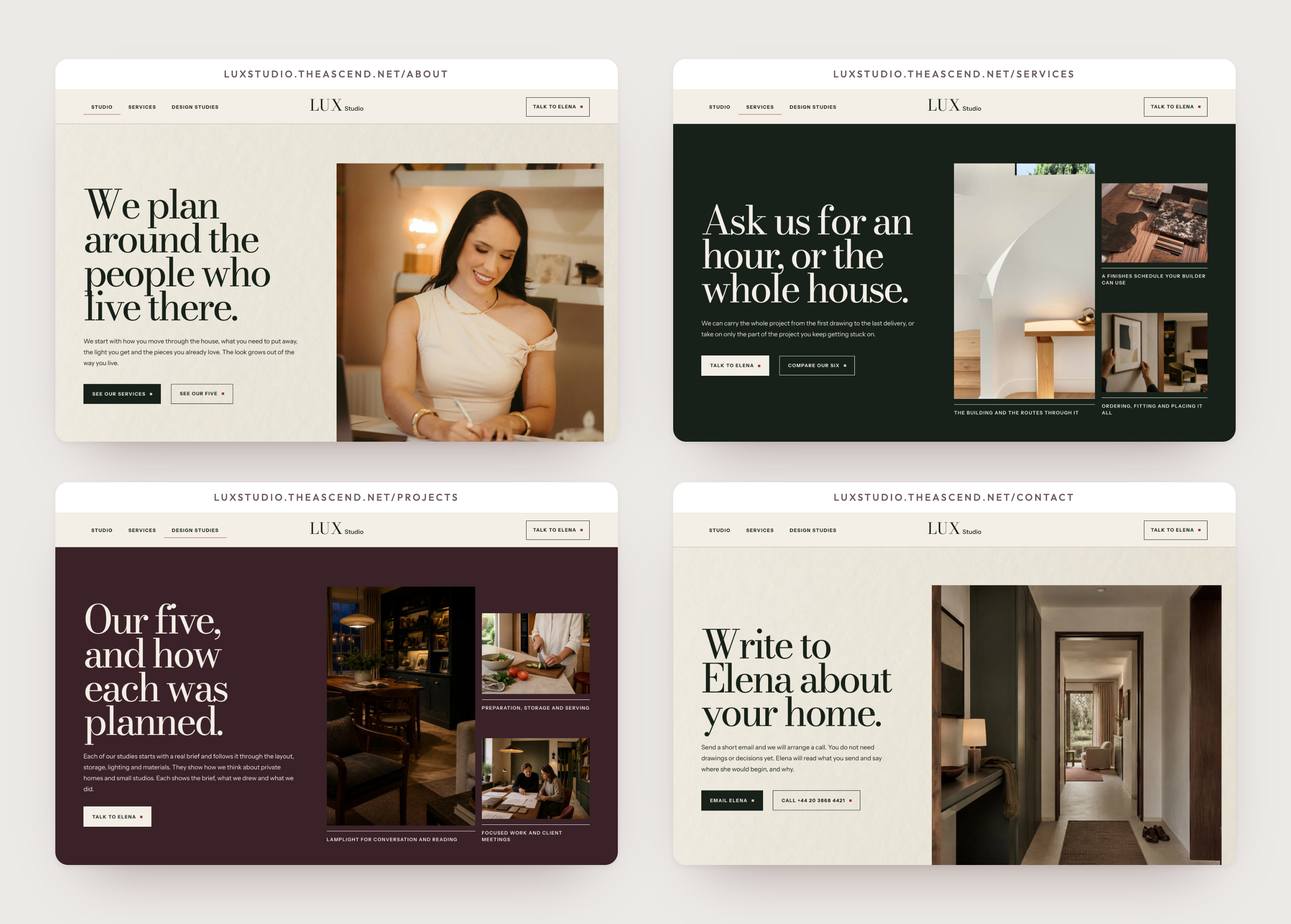
LUX Studio, an interior design studio, puts room photography beside every service, so a visitor sees the work before reading about it. A theme would have offered an icon and a heading for each service. For an interior designer the finished room is the proof, so the plan put the photographs first.
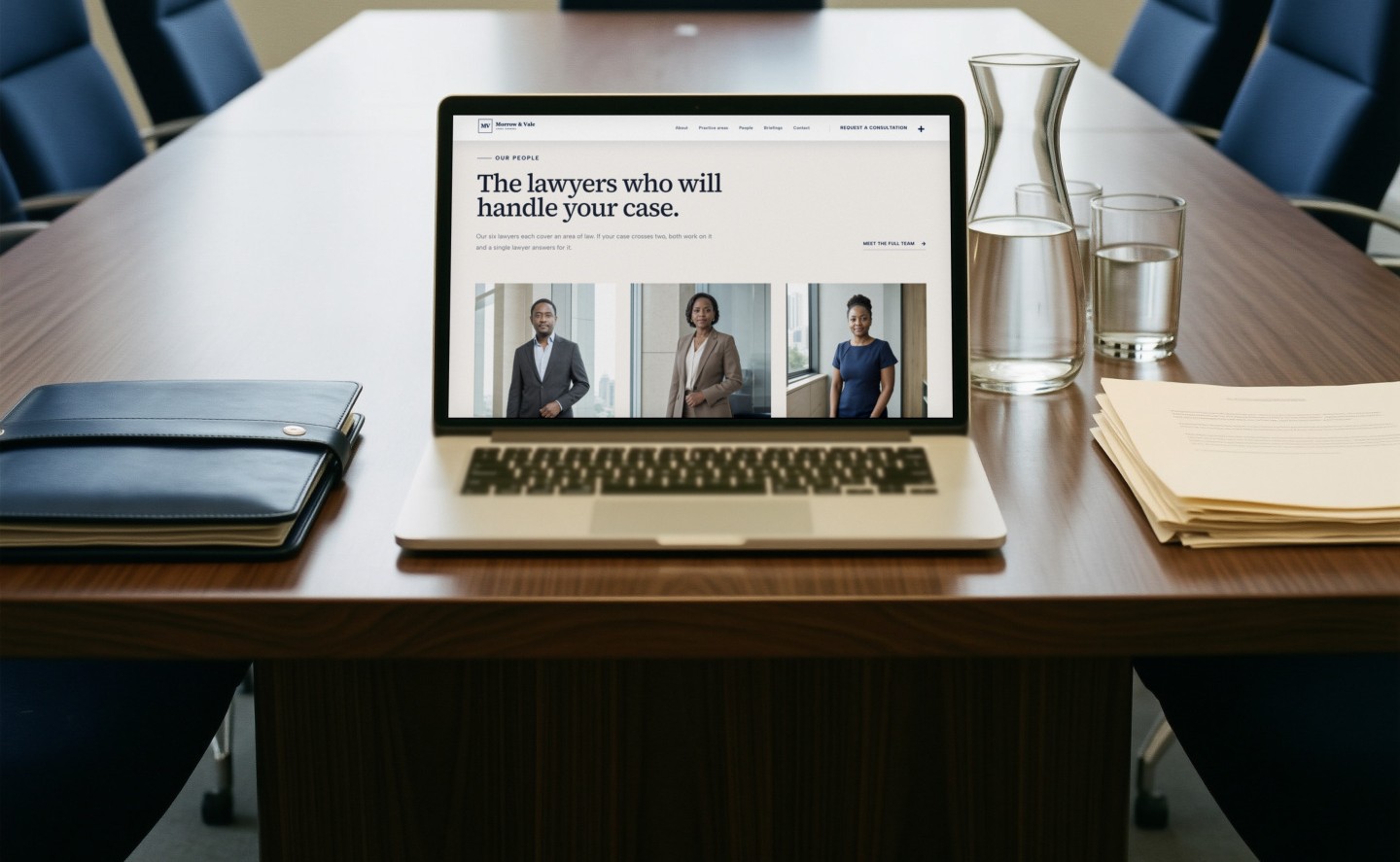
Morrow & Vale, a law firm, runs to eighteen pages. Each area of law has a page of its own, because people search for their problem. A template with a single Services page would have put every problem on the same page.
What the investment buys
Every launch I design starts with the page plan and the art direction described above. After those, each launch includes every layout checked on desktop, tablet and phone, an enquiry form tested with a real message before launch, a page title and description for every page, a round of final tweaks and a walkthrough of the edits you will make yourself. The investment, in US dollars:
- A landing page of up to 6 sections, built in 24 to 48 hours: from $500
- A one-page website of up to 8 sections, built in 48 to 72 hours: from $700
- A five-page website, over five booked working days: from $1,350
- A larger website of seven pages or more, built in stages you sign off: from $1,750
Those build times hold because the plan, the words and the photographs are agreed before the clock starts, as a website built in a day explains. Your written quote confirms the scope, dates and any extras before anything is booked, and every launch is set out on the Services page.
There is no promise of a number of enquiries or a place in search results. The site is built to bring enquiries, with a clear offer, visible proof and an easy next step, and the result also depends on your offer and how quickly you reply.
How can you tell a quote is bespoke?
The word costs nothing to print, and some agencies use it for a bought theme in new colours. Before you agree, ask the designer:
- Will I read a plan of the sections and their order before design starts?
- Who chooses the type and colour, and on what grounds?
- Is the site built on a bought theme, and if so, which?
- Whose name will the site, the domain and the hosting be in?
- What will I be able to change myself after launch?
Good answers are specific. A designer who works from a plan can show you the plan for a past website, laid beside the finished page.
Ask for the domain and the hosting to be in your name from the first day. If they sit in a designer’s or a builder’s account, the address your customers know is not yours to move.
Questions people ask about bespoke websites
Is a bespoke website the same as a custom website?
Yes. Both words describe a website designed for your business from a plan. Some agencies use either word loosely, so ask what the quote includes.
Can I edit a bespoke website myself?
Yes. The platform is chosen for how you will run the site: WordPress with Elementor if you want to change layouts, WordPress with custom fields if you only change the text and photographs, static HTML if it rarely changes, or Canva if your team already works there. At handover I show you the everyday edits on your own site.
Is a bespoke website better for search?
It can be, because the pages are planned around what your buyers search for, with a page for each service where a template might put them all on the same page. Nobody can promise a ranking. Each page gets its own written title and description before launch.
Do I need a brand before I invest in a bespoke website?
It helps to have colours and type you are happy with. If you have none yet, a Brand Starter Kit from $350 sets up colours, a type pairing and a written record of both first. Logo design is not included.
Can I start with a template and go bespoke later?
Yes, and for a new business it is a sensible order. Keep your copy, photographs and domain in your own name, and they move with you to the new site.