

Somebody with a dismissal to handle searches for the dismissal. They type what has happened, read whichever page answers it, and only then look at who wrote it. If your firm has a page for that kind of case, it can be the page they find.
So what goes on a practice area page? The client’s situation, the cases you take on, the lawyer who leads the area, how the fee and the timing work, and a way to ask. I will show each part on Morrow & Vale, a law firm website I designed with a page for each of its six areas of law.
Does every area of law need its own page?
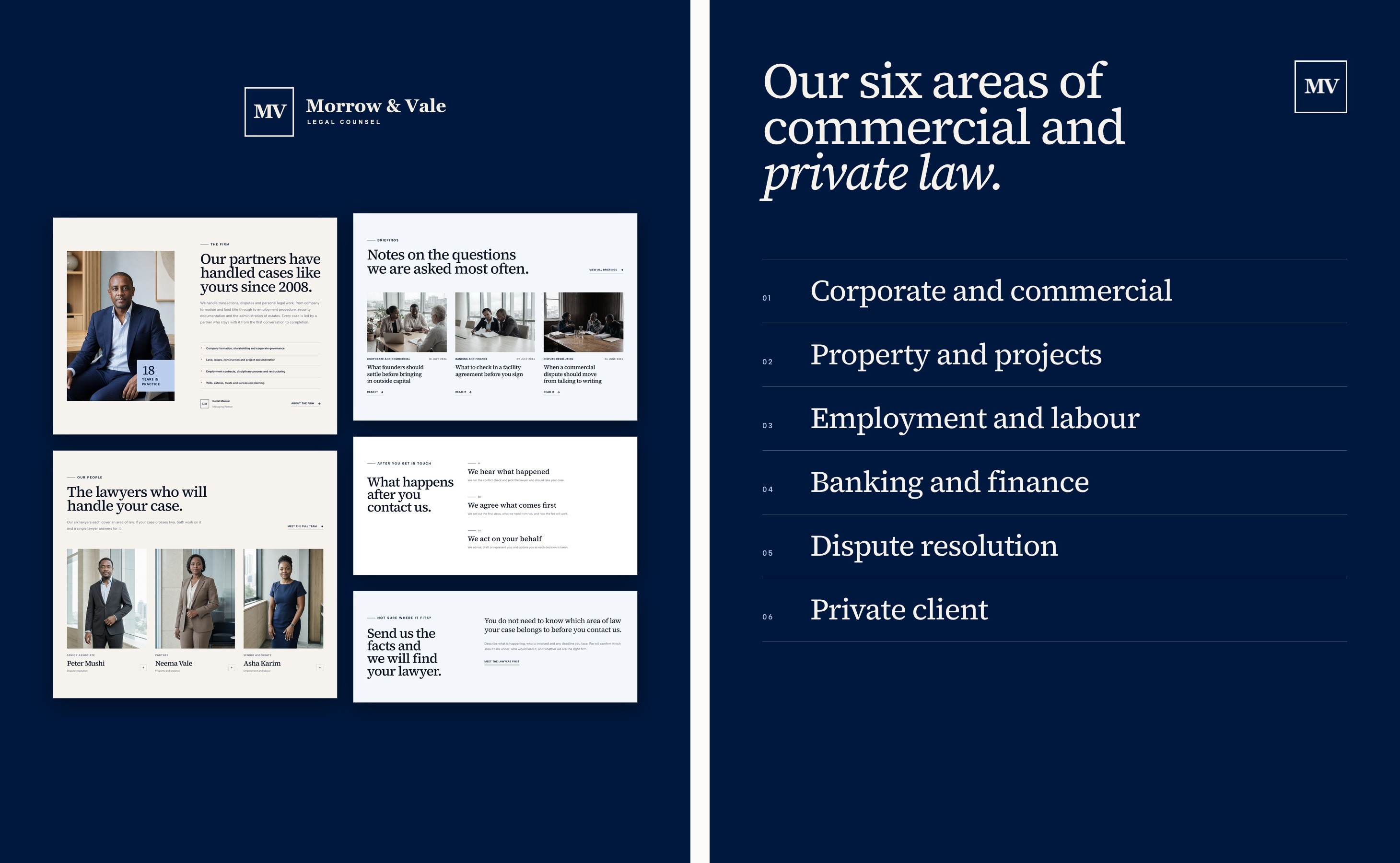
Every area you want clients for, yes. A single services page that lists six areas in a line gives a search engine nothing to match a specific problem to, and gives a worried reader nothing written for their situation. Morrow & Vale runs to eighteen pages, and six of them are practice areas: Corporate and commercial, Property and projects, Employment and labour, Banking and finance, Dispute resolution, and Private client. The main menu lists all six under Practice areas, so a reader reaches theirs from any page.
List only the areas where the firm has depth. Legal marketing writers make the same point: a practice page should reflect the firm’s core work, not an area a single lawyer has handled once or twice. As an area grows, it can split into pages for narrower kinds of case.
What should the top of the page say?
Who the area helps and what with, in a line a client would recognise. Morrow & Vale’s employment page opens: “We help employers get contracts, discipline and dismissals right before a claim arrives.” Under it sits the fact an employer needs before acting: a dismissal can be found unfair because of how it was carried out, even when the reason for it was sound.
Keep the area’s name in the trade’s terms and explain it in the client’s. “Private client” means little to a family with a will to make until the line beneath it mentions wills, estate administration, family property and succession.
Which cases should the page list?
The ones you want, grouped the way a client would look for them. Morrow & Vale’s employment page sets out its work under “Where we help” in three groups: Employment, for contracts, fixed-term arrangements and restrictive covenants; Workplace, for policies, disciplinary procedures and investigations; and Disputes, for representation at mediation and arbitration.
Write each group as the client’s situation first, then what the firm does about it. A director with a performance problem finds Workplace, and reads that the firm advises “before the decision is taken, while there is still time to get it right.”
Who will handle the case?
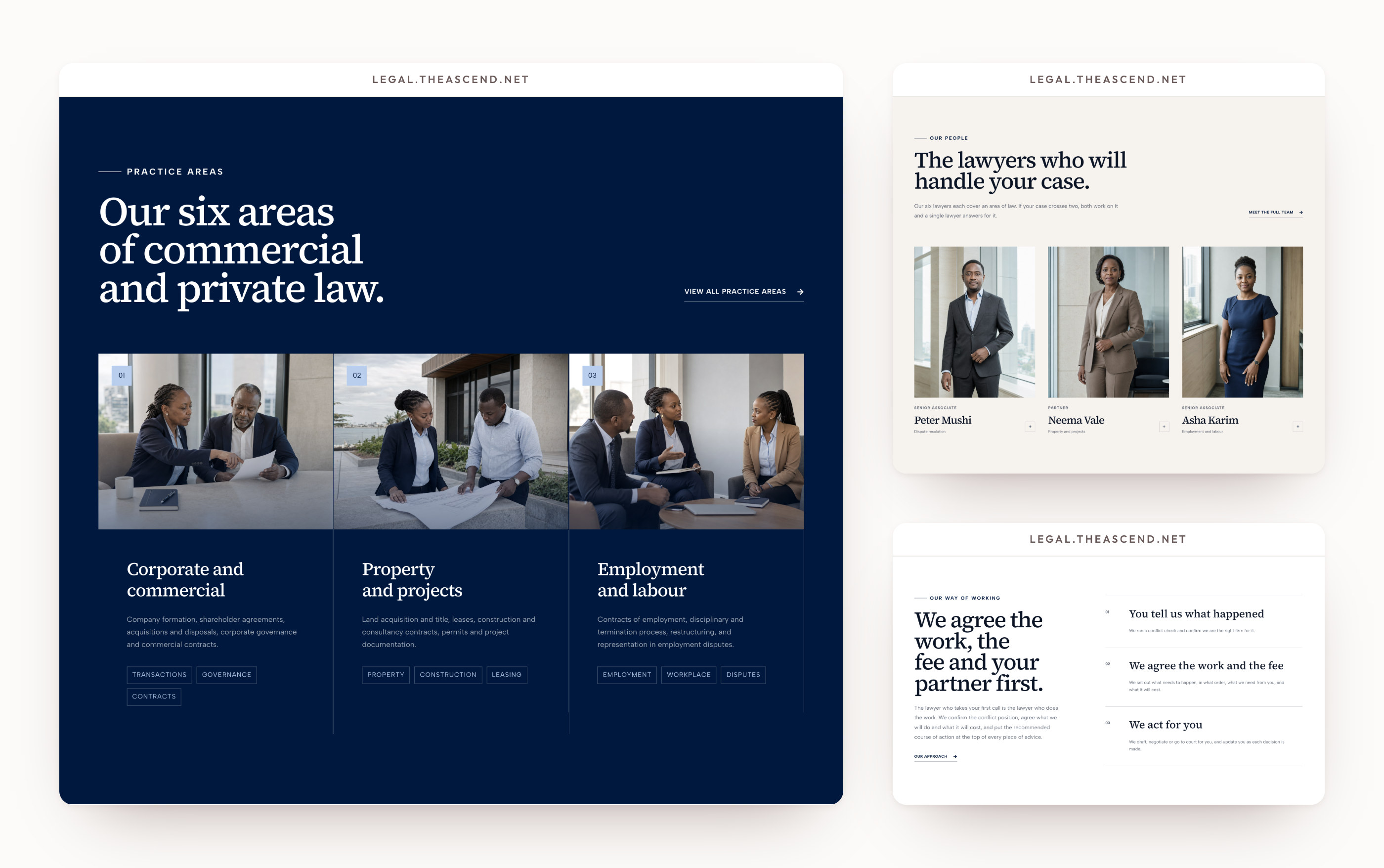
Name them on the page. Morrow & Vale says it on the home page in a sentence: “The lawyer who takes your first call is the lawyer who does the work.” The employment page promises a named partner who stays on the case, and each of the six lawyers has a profile that links to the area they lead, so the two pages point at each other.
Cases cross areas, and the site says what happens then: two lawyers work on it and one of them takes responsibility for the file, “so you still have a single lawyer to call.”
For a firm regulated in England and Wales, part of this may be required. Where the SRA Transparency Rules apply to a service, such as residential conveyancing, uncontested probate or employment tribunal claims for unfair or wrongful dismissal, the firm publishes the price, what it includes, the typical timescales and key stages, and the experience and qualifications of the people who will do the work, in a prominent place on its website. The practice area page is the natural home for it.
How much should the page say about fees and timing?
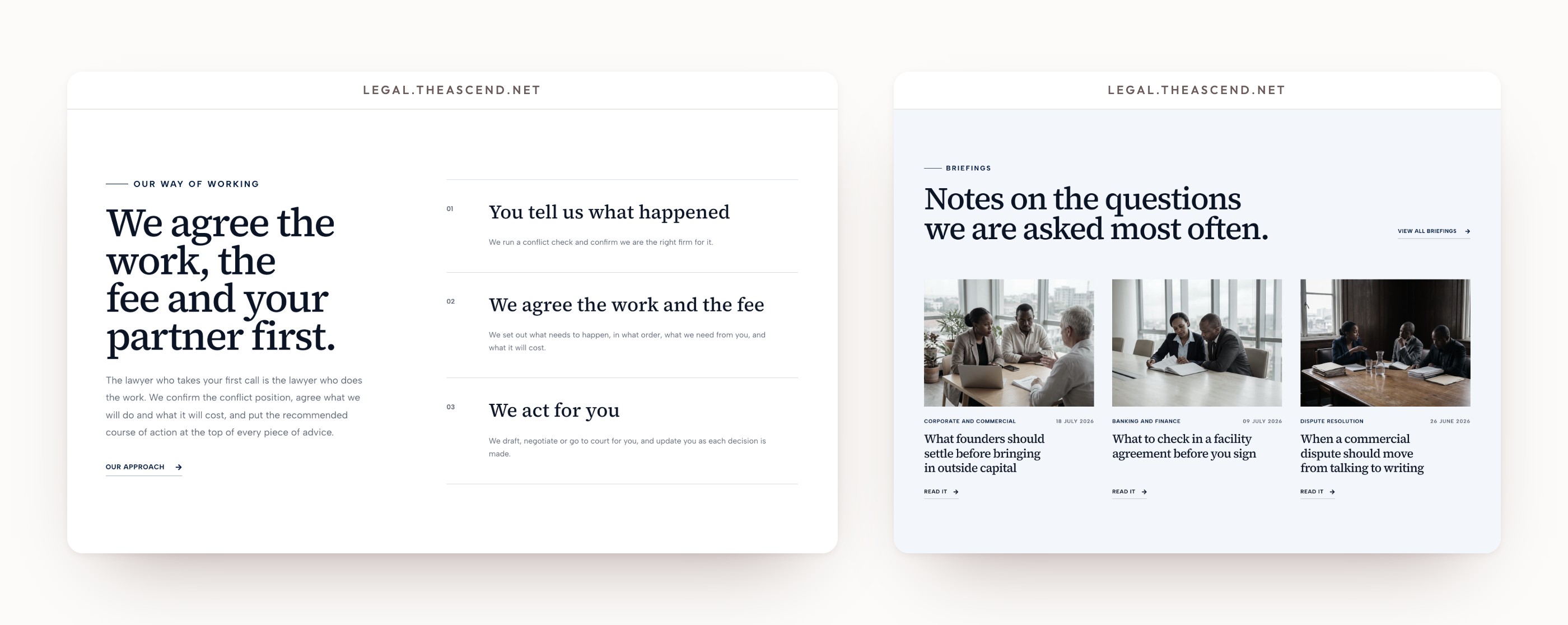
Enough that nobody meets the fee for the first time on an invoice. Morrow & Vale states its way of working on the home page: “We agree the work, the fee and your partner first.” The employment page answers the direct question, “Do you offer fixed fees?”, with the work that has one: contract and policy work, and a defined disciplinary process.
Timing belongs on the page too. The same page answers how much notice an employee is owed and how long they have to bring a claim, because a date decides what an employer has to do first. Its closing band says so: “Dates count here, so we will set out the procedure to follow before you act.”
Name the fee bases you use: a fixed fee for defined work, an estimate where the work can change, hourly rates where the time can’t be known, and the costs outside the fee, such as court fees. Whether to publish figures beyond what the rules require is a separate choice, weighed in should you put prices on your website.
Where do the longer explanations go?
Into briefings, linked from the practice page. A practice page has to stay short enough to read on a phone between meetings. The longer answers, the ones a partner gives on first calls every week, sit in written briefings with a date, an area of law and a reading time, such as “What to check in a facility agreement before you sign”.
Each briefing links back to its practice area and ends with a way to ask for advice. Briefings also let the firm come up for narrower searches that a practice page can’t cover, which is the being-found job I describe in what should your website do.
How should a practice area page end?
With a question in the client’s words and the form a click away. Morrow & Vale’s employment page ends on “Dealing with a difficult staff case?” and asks the reader to “Tell us what the employee did, what has happened since and when.” The corporate page ends on its own question: “Buying, selling or setting up a company?”
The form asks “Which area is it?” after the name, email and telephone, so the enquiry reaches the right partner. For a reader who isn’t sure, the practice areas page says: “You do not need to know which area of law your case belongs to before you contact us.” On your own form, add a line asking people to leave out confidential detail until you have spoken.

What a website like Morrow & Vale involves
Morrow & Vale runs to eighteen pages, which puts it among the larger websites: seven pages or more, scoped and quoted after a review of your content, from $1,750, and built in stages you sign off. The first stage can go live before the rest is finished, so the home page and your busiest practice areas can launch first. A sole practitioner with a focused practice can be well served by the five-page website, from $1,350 over five booked working days. Both are set out on the Services page, and how much does a website cost in 2026 explains what moves a quote.
What law firms ask about their website
How many pages does a law firm website need?
A sole practitioner can cover the practice, the fee, a profile and the enquiry form in five pages. A firm with several practice areas needs a page for each area and each lawyer, which is why Morrow & Vale runs to eighteen.
Should a law firm publish its fees online?
For some services in England and Wales the SRA requires it. For everything else, explain at least how the fee is agreed and when you confirm it in writing.
Does a law firm website need a blog?
It needs written guidance. Morrow & Vale calls its guidance briefings: short pieces that answer first-call questions, so the practice pages stay short.
How long does a law firm website take to build?
A five-page website is built over five booked working days once the structure, final copy, photographs and brand files are agreed. A larger website is built in stages you sign off, so the timing follows your approvals.
How do I choose a web designer for a law firm?
Ask to see a law firm website they have designed and check how it handles practice areas and profiles. There is a longer guide on how to choose a web designer in the Journal.

