
Bespoke websites for brands that want to look as good as their work.

What should your website do?

Enquiries, bookings, standing, being found. A page that tries to do all four does none of them well, so the job is the first decision to make.
Alan S.

Alan S.

Web designer and art director

5 minutes to read

October 2026

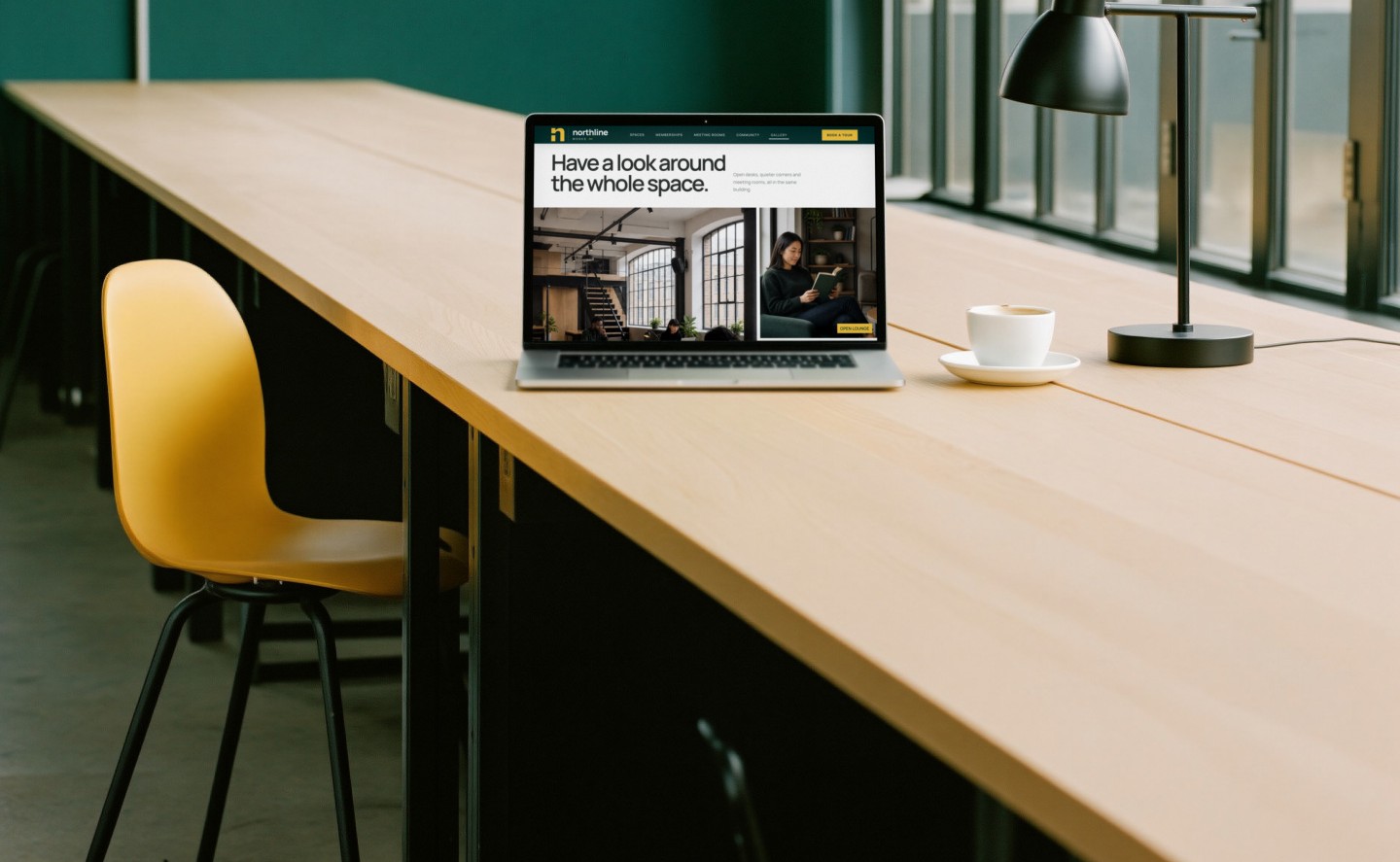
Northline Works on a laptop at a long oak desk

Northline Works: the website on a laptop, and the rates it shows on the page

The short version

  1. Every website has a main job: bringing in enquiries, taking bookings, giving the business standing, or being found by strangers.
  2. The job decides the details: the length of the form, whether the rates go on the page, how much goes on photography and how many pages you need.
  3. If the site has two jobs, start with the one that brings the money in, and give the second job its own pages once the first is working.

In this article

The first question I ask about a new website has nothing to do with colours or fonts. It is what your website should do: when somebody opens it, what do you want them to do next? It is tempting to answer with a list: more enquiries, more bookings, a better name, a place on Google.

That is a fair answer. A website feels as if it should do everything the business needs at once. A page that asks for three actions tends to get none of them, because every section either moves the visitor towards the action or dilutes the page.

A website has four possible jobs: bringing in enquiries, taking bookings, giving a business standing, and being found by strangers. Naming the one yours does comes before any design.

How does a website bring in more enquiries?

Somebody has already decided they want you. The page has to make writing to you feel easy and specific. This is the job for coaches, consultants, interior designers, event planners, and anybody selling their judgement by the hour or by the project.

You can judge an enquiry site by what arrives. An enquiry with a date, a rough figure and a postcode has been handled by the page. An enquiry that says only “can you send me a quote” has not.

When the messages arriving are empty, the form is asking the wrong questions. Add the questions you would ask on the phone. The form gets longer, and that is fine, because nobody can reply with a figure until they have the detail.

What should a booking website show first?

A booking is a date in a diary: a tour, a table, a room, a call. What is being booked already has a shape and usually a rate, so the page has less to gather and more doubt to remove. The visitor wants to know when they can come and what is included.
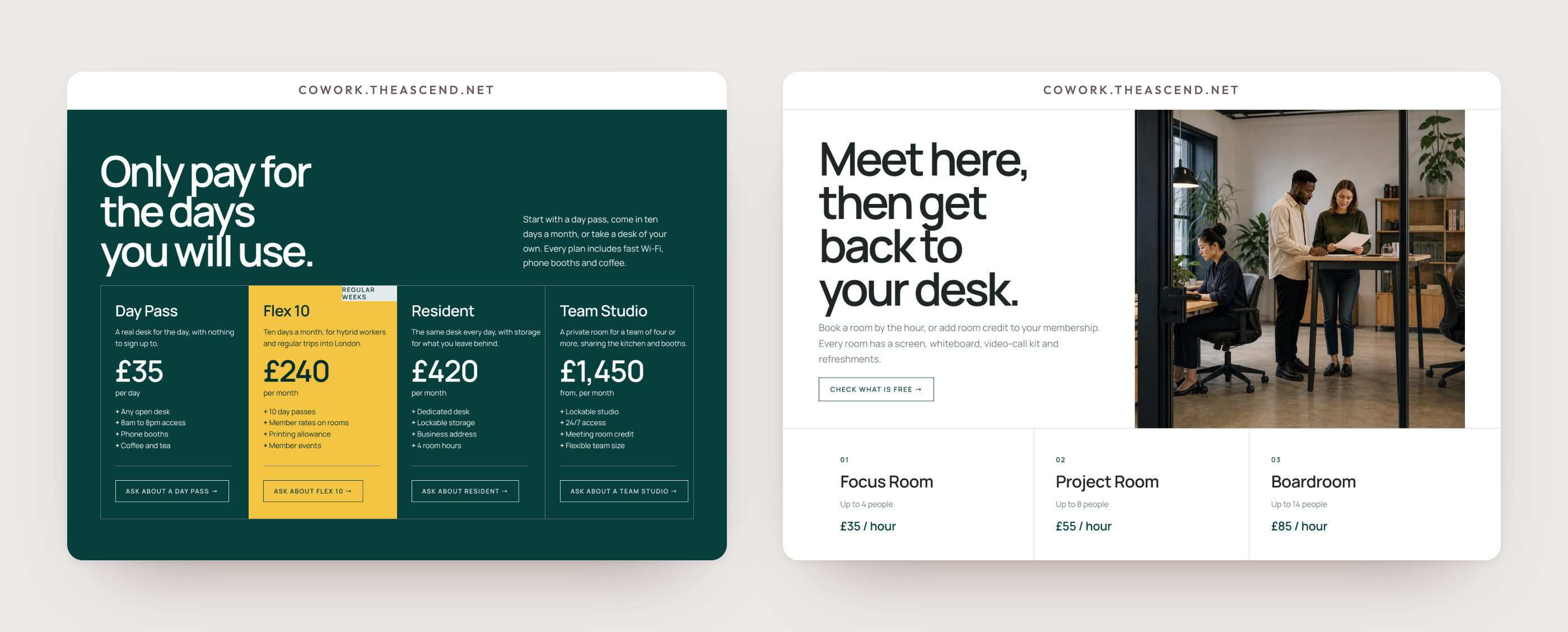
Northline Works: each meeting room with its capacity and hourly rate, beside the memberships.

Lodges, coworking spaces, restaurants and venues all sell something that expires. A Tuesday that goes unsold is gone. That urgency should show in how the page is built, with the dates near the top and the rate beside each option.
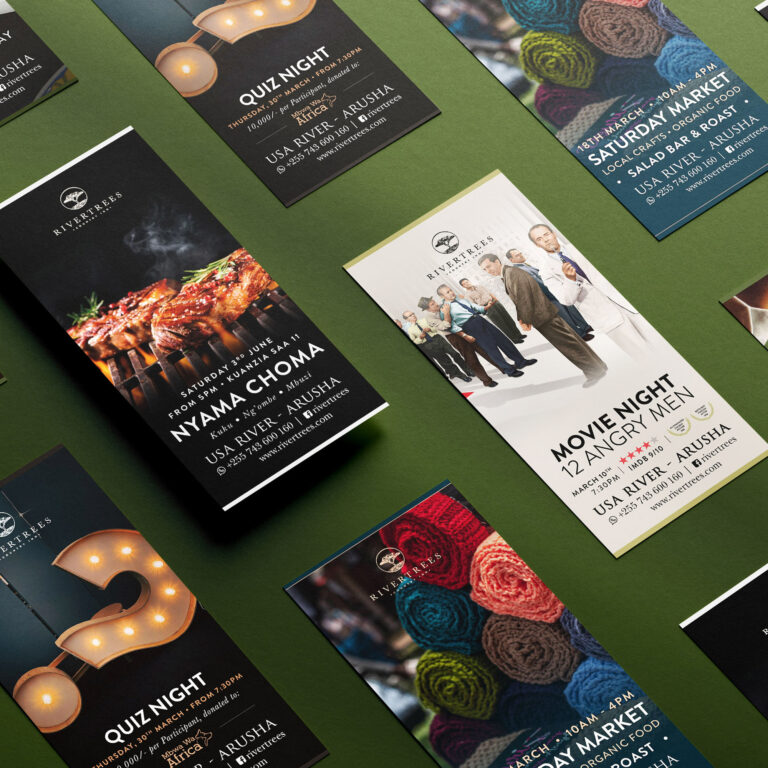
Rivertrees Country Inn
“Our revenues grew significantly through Alan’s sales and marketing work. He brought clear communication and reporting, and a rare mix of efficiency and attention to detail, with creative problem-solving across the challenges inside the hotel.”
General Manager, Rivertrees Country Inn

What if your work comes by referral?

Nobody books anything on this kind of site. It exists so that when your name comes up, what people find makes your rates look reasonable. Firms, new practices, speakers and anybody whose work arrives by referral need a site doing this job.

It is the hardest job to argue for, because it has no number attached. It is also the job where design does the most work, and where a cheap-looking site loses the most money without ever showing up as a lost enquiry.

On a standing site, the photographs and the writing carry the argument. A visitor who has been told you are good judges the claim by the page in front of them, and a page that looks rushed makes the recommendation look careless.

A page that asks for three actions tends to get none of them.

How does a website get found in search?

The visitor does not know you exist. They are searching for their problem. This job depends on structure more than persuasion, and it usually needs more than a handful of pages.

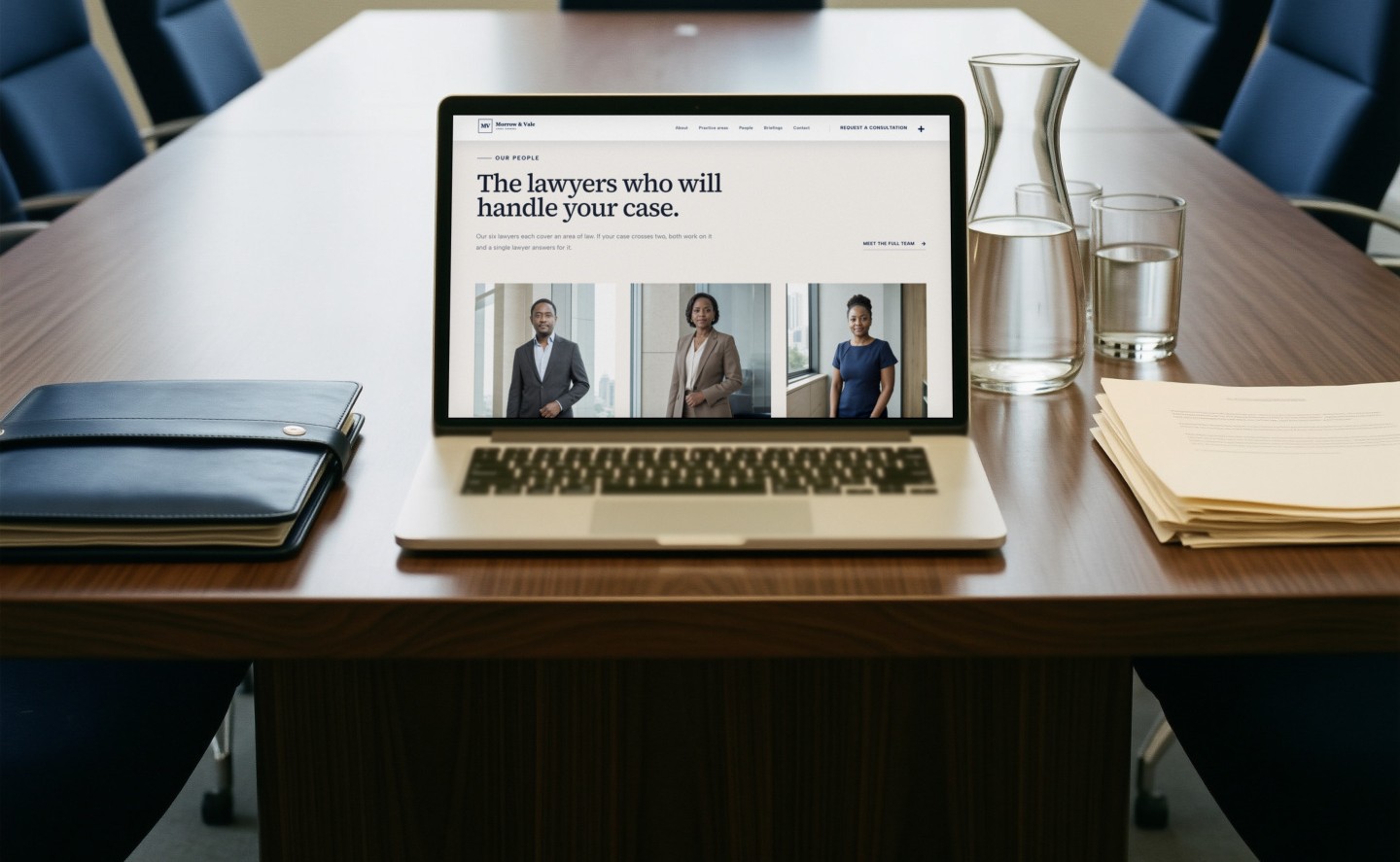
Morrow & Vale, a law firm website I designed, runs to eighteen pages for this reason. Six practice areas means six ways in, because people in trouble search for their problem before they search for a firm. They search for “can my employer do this”.

Each of those pages should open on the visitor’s question in their own words, answer it, and only then introduce the firm. The introduction can wait, because the stranger came for the answer.
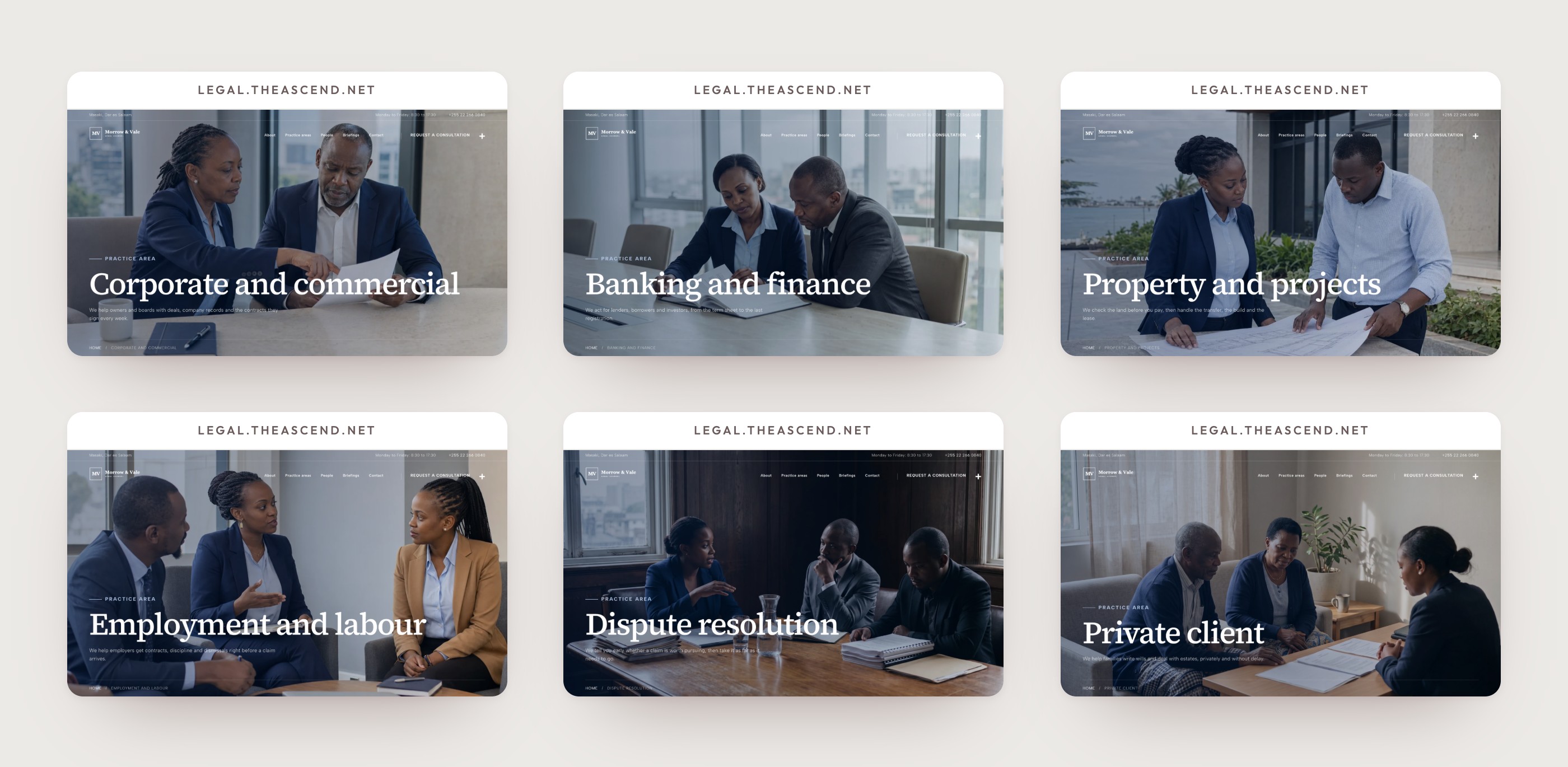
Morrow & Vale: six practice areas, six ways in for somebody searching their own problem

What does the job decide on your website?

Name the job and most of the debates on a website project go away. You stop arguing about publishing your rates, because for bookings the answer is yes and for standing it might be no. You stop arguing about the page count, because being found needs many pages and enquiries can usually live on a single page.

Each job decides something different:

  • Enquiries decides the form. It gets longer, because the detail is what lets you reply with a figure.
  • Bookings decides the rates. They go on the page, because the visitor is comparing.
  • Standing decides the photography. More of your investment goes there, because quality shows first in the pictures.
  • Being found decides the page count. It goes up, because each problem needs its own entrance.

Some businesses have two jobs. A lodge wants bookings from guests who already know it, and it needs to be found by guests who do not. Start with the job that brings the money in, and give the second job its own pages once the first is working.

A website will not create demand for you. It takes the person who is already looking and moves them to a single action, and that action is the decision to make before any other.

Questions people ask about what a website should do

What is the main purpose of a business website?

To move the person who is already looking to a single action: an enquiry, a booking, trust in your name or the answer they searched for. Choose the job that brings the money in first.

Can a website do more than one job?

Yes, with separate pages. Start with the job that brings the money in, and give the second job its own pages once the first is working.

How do I know which job my website does?

Look at how your last few customers found you and what they did next. If they wrote to ask, the job is enquiries. If they booked a date, bookings. If they came recommended, standing. If they found you by searching their problem, being found.

Alan S.

Alan S.

Web designer and art director

I design bespoke websites for people and businesses who have invested in their brand, after more than ten years leading brand and creative work. Before that I spent years on the client’s side as an editorial designer, brand lead and art director, briefing the studios that built their sites. I work with brands worldwide, and every project meeting is held online.

More about me

  • Since 2012in design and brand work
  • +40%brand visibility, safari lodge group
  • +30%online engagement, international school
  • 100,000+inflight magazine readers reached

Read next

Nia Amani's website on a laptop at a walnut table in the evening

How do coaches get clients from a website?

Referrals, LinkedIn posts and searches all end on your website. What a stranger checks there before writing to you, and why the first step can be a note.

6 minutes to read

Morrow & Vale on a laptop in a boardroom

What goes on a law firm’s practice area page?

Clients search for their problem before they search for a firm. What each practice area page needs, in the order a client reads it, from an eighteen-page law firm website.

6 minutes to read

Planning a website of your own?

Before you write to me, decide which job your website does, and put it in the first line of your enquiry.

Hi, I'm Alan.

I design bespoke websites for brands that want to look as good as their work. Read the quick answers below, or send me your budget and your project on WhatsApp.

Quick answers

A website planned and designed for your business only. First we agree who the site is for and what visitors should do. Then every page is designed around your own words, photos and brand. Nothing is copied from a ready-made theme.

A template is a finished design that waits for your content. Your text is cut to fit its boxes, your photos are cropped to its shapes, and other businesses use the same design. A bespoke website starts with your business, so each section fits what you sell and how you present it.

You have spent years and money on your name, your photos and your reputation. A bespoke website shows that same quality online, so new clients see the standard of your work before they contact you.

I take on a few projects at a time, so each website gets my full attention from the first plan to launch day.

People and businesses who have invested in their brand:

  • Coaches, consultants, speakers, therapists and influencers
  • Law firms, attorneys and advisers
  • Interior designers, architects and home stylists
  • Event planners, wedding planners and decorators
  • Coworking spaces, studios and venues
  • Photographers, artists, writers, schools, lodges and other service businesses

Here are five websites I designed and built, each for a different kind of business:

See all five websites

  • Landing page: from $500
  • One-page website: from $700
  • Five-page website: from $1,350
  • Larger websites: from $1,750
  • Website Care: from $129 a month

Your budget sets the scope. Your written quote confirms the price and dates before anything is booked.

Yes, including websites someone else built:

  • A redesign, or new versions of the pages that are not working
  • Website Care every month, from $129 a month
  • A paid website review: a written list of what to fix first
  • Copy polish from $175, or new copy written for you
  • An email signature, a Google Business Profile, analytics or an email signup

Send me the link and what you need, and I confirm the price before we start.

From $129 a month: updates with a backup first, a test message through your form, broken links fixed and a short note on what was done.

Content updates, security checks and a monthly analytics report can be added to your plan. You can stop with a month’s notice.

  • Email signature design: quoted
  • Google Business Profile setup: quoted
  • Analytics and search setup: $125
  • Email signup connection: $125
  • Blog foundation: $250
  • Extra section: $90, or a sixth page: $200
  • Copy polish: from $175, or original copywriting, quoted
  • Brand Starter Kit for your colours and fonts: from $350
  • Hosting and domain: quoted yearly

A landing page takes 24 to 48 hours. A one-page website takes 48 to 72 hours. A five-page website takes five booked working days. The time starts once your words, photos, brand files and payment are in.

Your final words, your chosen photos and your brand files, such as your logo, colours and fonts.

No brand yet? The Brand Starter Kit sets your website colours and fonts, from $350. Logo design is not included.

Yes. Your website is built on WordPress, HTML or Canva, whichever suits how you will run it, and it is set up in your name. At handover I show you how to make everyday changes yourself.

No. I work with brands worldwide, and every meeting is online, on WhatsApp, Zoom or Google Meet.

Send me your budget, your business and your launch date on WhatsApp, or send your brief here. I reply with your next step.

Start dates are limited, so the sooner you write, the more dates you can choose from.