

Bespoke websites for brands that want to look as good as their work.

Does your business need a one-page website?

A single page can carry a whole business, or be the lazy answer for a business that needed six ways in. A short question tells you which.
Alan S.

Alan S.

Web designer and art director

4 minutes to read

October 2026

Northline Works portfolio project: members talking in armchairs during office hours

Nia Amani: a one-page website, read on a phone

The short version

  1. A landing page sells a single offer. A one-page website introduces the whole business.
  2. Ask how people find you: by your name, or by their problem.
  3. By name, a single page can carry you. By problem, each problem needs its own page.
  4. On a single page, the order does the selling.

In this article

A one-page website can carry a whole business. It can also be the lazy answer for a business that needed six ways in. The question that separates them takes about a minute to answer.

Before the question, it helps to pull apart two kinds of page that often share a name.

Landing page or one-page website?

A landing page sells a single offer and asks for a single action. It suits a campaign, a course, a workshop or a new service, and everything on it points at that action. It often sits beside a main website, as the page an advert or an email links to.

A one-page website introduces the whole business on a single scrolling page: your services, your story, what people say about you and how to reach you. New visitors get the full introduction without clicking between pages, and the menu links jump down the page to each part.

A landing page is built in 24 to 48 hours, as an investment from $500. A one-page website is built in 48 to 72 hours, from $700.

Is a one-page website enough for your business?

Do people find you by your name, or by their problem?

If they come by name, a single page can carry you. They heard about you from a friend, saw you speak, or followed a link from your social profile. They already know who you are, and the page has to confirm it and make the next step easy.

If they come by their problem, typed into a search box, each problem needs its own page. A person searching for help with a specific worry wants the page that answers it. A long scroll that mentions it halfway down is unlikely to come up in that search, and less likely to hold them if it does.

You can answer it in a minute. Think of your last few customers and how each of them first heard of you. If you are not sure, ask the next few directly, or look at what your enquiries say.

The answer can be mixed. If most come by name and a few by search, start with a single page, and add pages later for the searches that bring your best customers.

A single page planned well from the start is easier to extend than a crowded page is to untangle.

Which of my websites are single pages, and why?

My five websites show both answers.

Nia Amani, a career coach, is a single page. Her visitors need to trust her before they send a first note, so the page introduces Nia after their problem, shows each offer with its investment and ends on a short form.

Northline Works, a coworking space in East London, is a single page too. Its visitors want the practical details without clicking through several pages, so the scroll moves from the feel of the space to memberships, meeting rooms and a tour booking.
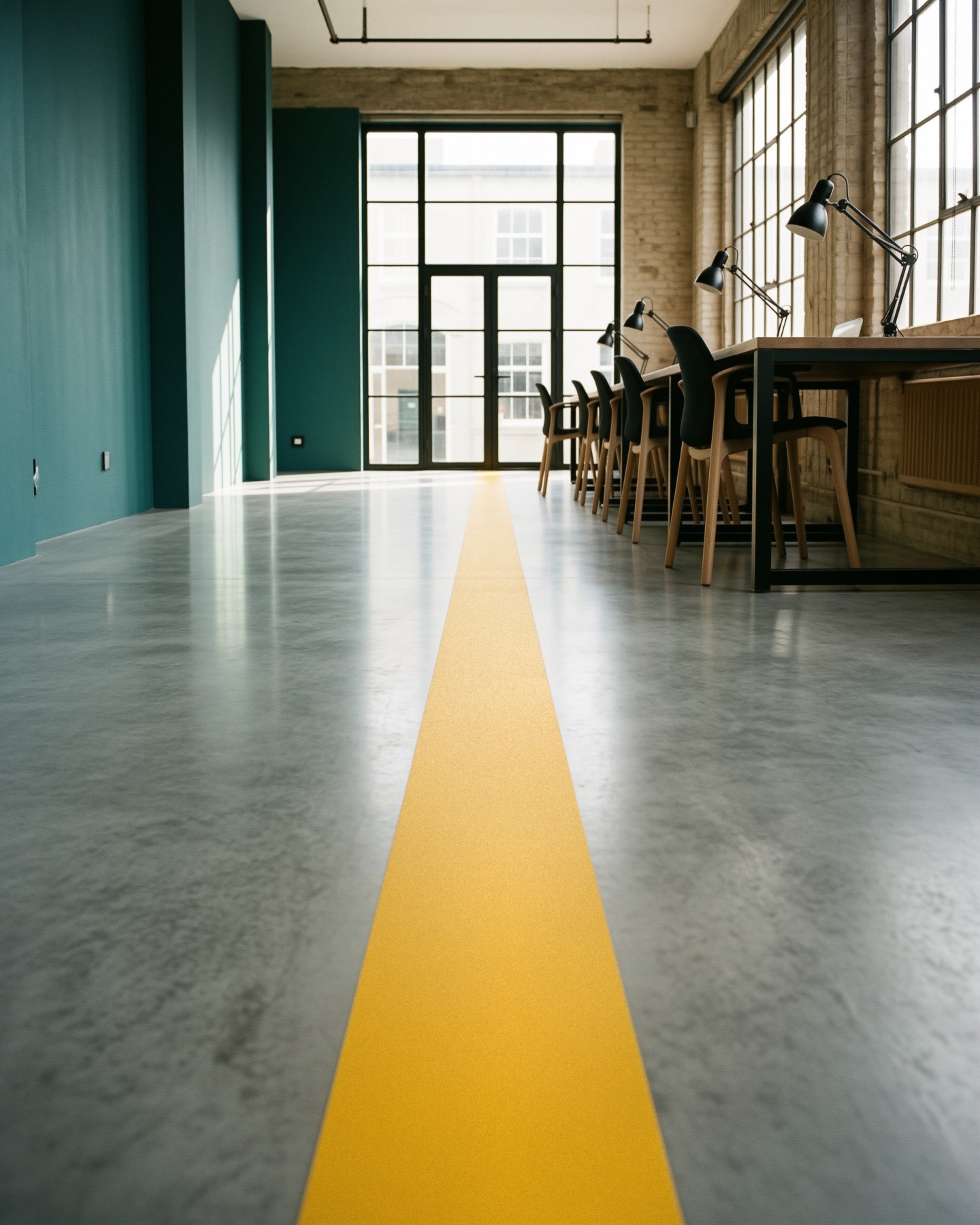
Northline Works: the yellow line along the concrete floor
Northline’s yellow line across the studio floor, and the single page on a phone.

LUX Studio, an interior designer, runs to five pages, because the work needs room: large project photographs, and services explained the way a homeowner talks about their house.

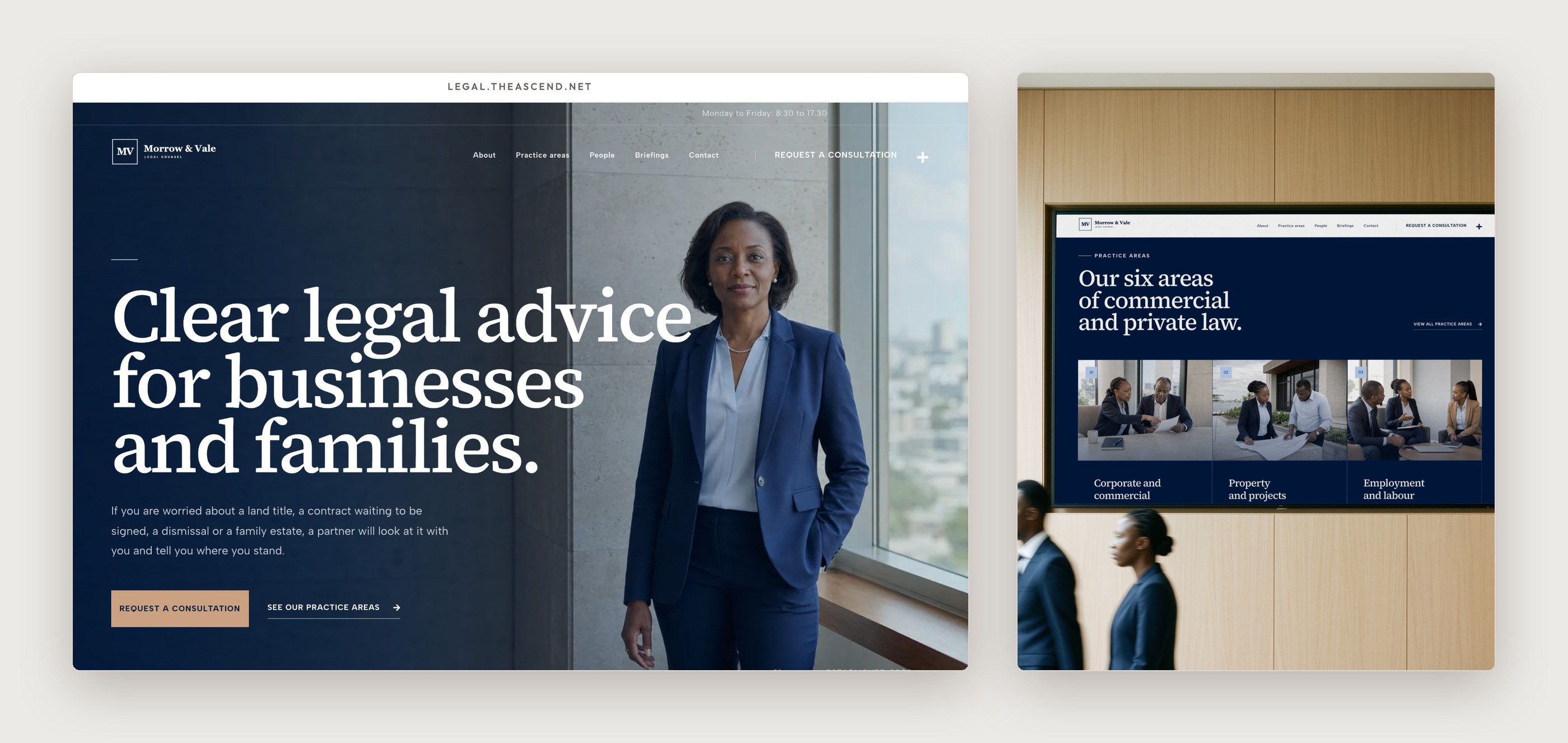
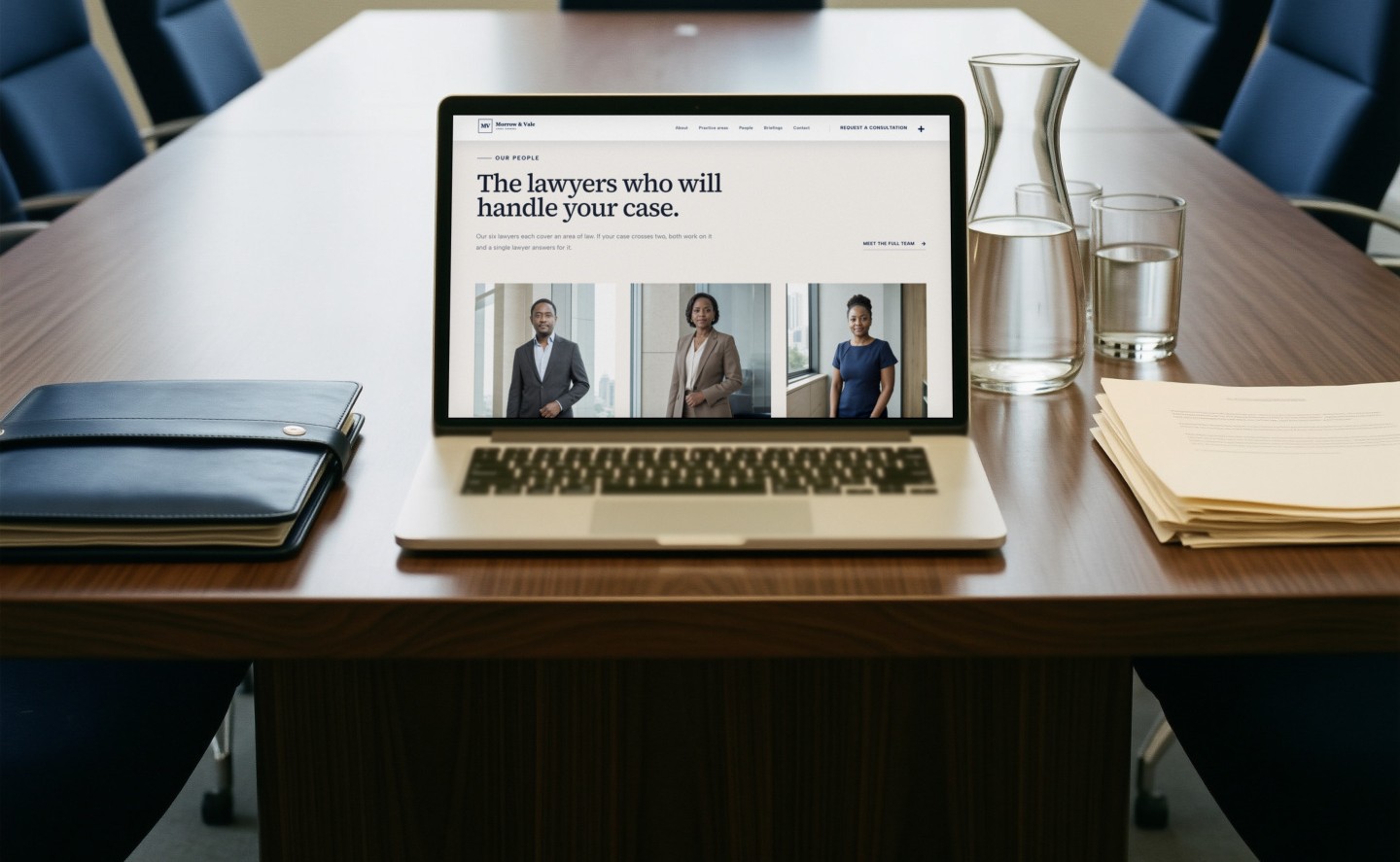
Morrow & Vale, a law firm, runs to eighteen. Its visitors are worried and searching for their own situation, so each practice area has its own page and each lawyer a profile.

What order should a one-page website follow?

A single page has no separate pages to lean on, so the sequence carries it:

  1. Say what you offer and who it is for, before anything else.
  2. Put the proof beside your services, where doubt usually starts.
  3. Leave the way to get in touch at the end, where the reader is ready for it.
  4. Keep it in the menu too, so nobody has to scroll back.

On a phone, a single page is a long scroll, so each section needs a heading that tells the reader where they are. A visitor should know what you sell before the first photograph has scrolled away.

Seissense
“Alan brought order to our content chaos. He structured raw concepts into a creator-ready system that matched our brand voice. He improved our content workflow and made execution clearer for our creators.”
Brand Operations, Seissense, UK

When does a business outgrow a single page?

The signs are easy to spot once you look. You keep adding sections for different kinds of customer, or you want to come up in searches for specific problems.

When your offer needs more than a page to explain, a five-page website gives it room, built over five booked working days from $1,350, and larger sites are scoped and quoted from $1,750. A one-page website is still a sound start for a business that expects to grow, because the copy and photographs you prepare for it carry over into the larger site.

Questions people ask about one-page websites

How much does a one-page website cost?

A one-page website is an investment from $700. A landing page starts from $500, and a five-page website from $1,350.

How long does a one-page website take to build?

A one-page website of up to eight sections is built in 48 to 72 hours, once the words and photographs are ready.

Is a one-page website good for SEO?

For people who find you by name, yes. For people searching their own problem, each problem needs a page of its own, and a single long page is unlikely to come up for all of them.

Can a one-page website have a menu?

Yes. The menu links jump down the page to each part, and the way to get in touch stays in the menu too, so nobody has to scroll back.

Alan S.

Alan S.

Web designer and art director

I design bespoke websites for people and businesses who have invested in their brand, after more than ten years leading brand and creative work. Before that I spent years on the client’s side as an editorial designer, brand lead and art director, briefing the studios that built their sites. I work with brands worldwide, and every project meeting is held online.

More about me

  • Since 2012in design and brand work
  • +40%brand visibility, safari lodge group
  • +30%online engagement, international school
  • 100,000+inflight magazine readers reached

Read next

Nia Amani's website on a laptop at a walnut table in the evening

How do coaches get clients from a website?

Referrals, LinkedIn posts and searches all end on your website. What a stranger checks there before writing to you, and why the first step can be a note.

6 minutes to read

Morrow & Vale on a laptop in a boardroom

What goes on a law firm’s practice area page?

Clients search for their problem before they search for a firm. What each practice area page needs, in the order a client reads it, from an eighteen-page law firm website.

6 minutes to read

Planning a website of your own?

Open Northline and then LUX on your phone, and notice which is closer to how your own customers find you.

Hi, I'm Alan.

I design bespoke websites for brands that want to look as good as their work. Read the quick answers below, or send me your budget and your project on WhatsApp.

Quick answers

A website planned and designed for your business only. First we agree who the site is for and what visitors should do. Then every page is designed around your own words, photos and brand. Nothing is copied from a ready-made theme.

A template is a finished design that waits for your content. Your text is cut to fit its boxes, your photos are cropped to its shapes, and other businesses use the same design. A bespoke website starts with your business, so each section fits what you sell and how you present it.

You have spent years and money on your name, your photos and your reputation. A bespoke website shows that same quality online, so new clients see the standard of your work before they contact you.

I take on a few projects at a time, so each website gets my full attention from the first plan to launch day.

People and businesses who have invested in their brand:

  • Coaches, consultants, speakers, therapists and influencers
  • Law firms, attorneys and advisers
  • Interior designers, architects and home stylists
  • Event planners, wedding planners and decorators
  • Coworking spaces, studios and venues
  • Photographers, artists, writers, schools, lodges and other service businesses

Here are five websites I designed and built, each for a different kind of business:

See all five websites

  • Landing page: from $500
  • One-page website: from $700
  • Five-page website: from $1,350
  • Larger websites: from $1,750
  • Website Care: from $129 a month

Your budget sets the scope. Your written quote confirms the price and dates before anything is booked.

Yes, including websites someone else built:

  • A redesign, or new versions of the pages that are not working
  • Website Care every month, from $129 a month
  • A paid website review: a written list of what to fix first
  • Copy polish from $175, or new copy written for you
  • An email signature, a Google Business Profile, analytics or an email signup

Send me the link and what you need, and I confirm the price before we start.

From $129 a month: updates with a backup first, a test message through your form, broken links fixed and a short note on what was done.

Content updates, security checks and a monthly analytics report can be added to your plan. You can stop with a month’s notice.

  • Email signature design: quoted
  • Google Business Profile setup: quoted
  • Analytics and search setup: $125
  • Email signup connection: $125
  • Blog foundation: $250
  • Extra section: $90, or a sixth page: $200
  • Copy polish: from $175, or original copywriting, quoted
  • Brand Starter Kit for your colours and fonts: from $350
  • Hosting and domain: quoted yearly

A landing page takes 24 to 48 hours. A one-page website takes 48 to 72 hours. A five-page website takes five booked working days. The time starts once your words, photos, brand files and payment are in.

Your final words, your chosen photos and your brand files, such as your logo, colours and fonts.

No brand yet? The Brand Starter Kit sets your website colours and fonts, from $350. Logo design is not included.

Yes. Your website is built on WordPress, HTML or Canva, whichever suits how you will run it, and it is set up in your name. At handover I show you how to make everyday changes yourself.

No. I work with brands worldwide, and every meeting is online, on WhatsApp, Zoom or Google Meet.

Send me your budget, your business and your launch date on WhatsApp, or send your brief here. I reply with your next step.

Start dates are limited, so the sooner you write, the more dates you can choose from.