
A family lands in Dar es Salaam for a two-year posting. In the first week they need a school, a doctor, a church with a service in English and somewhere to buy a bed. They do not know anyone to ask yet, so they search on a phone, in English, from a hotel room or a half-empty flat.
Your website is the first time they meet you. They decide whether your school, clinic, church or business is right for them long before they see your building.
This article is for schools, clinics, churches and businesses that want to reach English speakers in Dar es Salaam, from expatriate families to students and people on a work posting. It sets out what a newcomer looks for, where the International School of Tanganyika, Braeburn Dar es Salaam and Ocean Church already answer it well, and a checklist for your own website.
What English speakers in Dar es Salaam look for
Someone who grew up in Dar can ask a cousin which school is good or which church has a service in English. A newcomer cannot. Their first source is your website, and the questions they bring are practical:
- Is everything in English, and will my family understand what is going on?
- Where exactly are you, and how do I get there?
- What does it cost, and how do I pay?
- What happens on the first day or the first visit?
- Can I start before I arrive in the country?
- Who will I meet?
If the answers are missing, the family looks at the next name on the list. If they are there, written plainly, the family sees that you are used to people like them, and that you take them seriously.
Write for someone new in town
The International School of Tanganyika (IST) does this well. Its Living in Tanzania page opens with a family walking out of the airport into the heat, and the questions in their heads: “What will our new home look like? What will the community be like?” Then it teaches a few words of Swahili, such as Karibu for welcome and Asante for thank you.
IST describes itself on its home page as an independent, not-for-profit day school on two campuses in Dar es Salaam, for students from Pre-K to grade 12. The Living in Tanzania page speaks to the parent before it speaks about the school.
The Ocean Church redesign I proposed does the same in one line, near the top of the home page:
Whether you are here on a two-year contract or have lived in Dar all your life, you will find people ready to welcome you.
Write the first paragraph of your website for the person who arrived this month. Use plain English, explain a local word the first time you use it, and say clearly who you serve. A reader whose first language is French, Hindi or Korean should understand it without a dictionary.
Answer the practical questions first
IST’s New Family Resources page covers what a parent needs in the first week: which gates to use for parking and drop-off, the school hours for each campus, and the ID cards and car stickers parents need on campus. Its bus page explains that the school buses travel through neighbourhoods where many IST families live.
Braeburn Dar es Salaam has a section on its admissions page called Preparing for School, with school lunches, uniforms and transport. It says its yellow school buses have routes covering most of Dar es Salaam.
A church, a clinic and a shop each have their own version of these questions, and the answers belong on the website before the visitor has to write to you:
- A church: the service times and language, parking, the door to use and what to wear.
- A clinic: the services in plain words, the doctors’ names, the insurance you accept, your opening hours, how to book and what to do out of hours.
- A shop or restaurant: the address with a map link, the opening hours, the prices, the areas you deliver to and whether you take cards and mobile money.
- A service business: what you do, who it is for, a price or a starting price, and how quickly you reply.
Your reader may speak English as a second language, so keep the sentences short and the words simple. Prices in Tanzanian shillings help, and a line on whether you also accept US dollars saves a message.
Put prices and term dates on the website
A family planning a move compares costs before they choose. IST publishes its annual tuition fees for 2026 to 2027 by grade, in Tanzanian shillings, with notes on what the fee covers and how fees work for a student who joins late.
Braeburn’s admissions page lists the term dates for the 2026 to 2027 year, with the first term opening on 24 August 2026, and links to its fee structure and admissions policy.
When the price and the dates are on the website, a family can see whether they fit before they write to you. The messages you receive come from families who already know the basics, so your admissions team spends its time on real questions. I wrote more about this in putting your prices on your website.
Make it easy to start from abroad
Some families choose a school, a doctor or a church before they land. Braeburn’s admissions page suggests a tour before applying, or “an informal chat with the Headteacher if you’re currently outside the country”. It offers in-person and online visits, takes students at any point in the year and arranges a taster day, when a child spends time at the school.
IST’s admissions questions say the steps are the same whether a family applies in person or from overseas, and that parents get a decision about three days after their paperwork is finished.
On a church website, that can be a sermon to watch and a named person to write to. A clinic can offer a booking form or a WhatsApp number that a person answers, and a business can show prices a newcomer can check before the flight.
Say the service is in English
For a Christian family, finding a church can be part of settling in. The website has to say plainly that the service is in English, when it is and where.
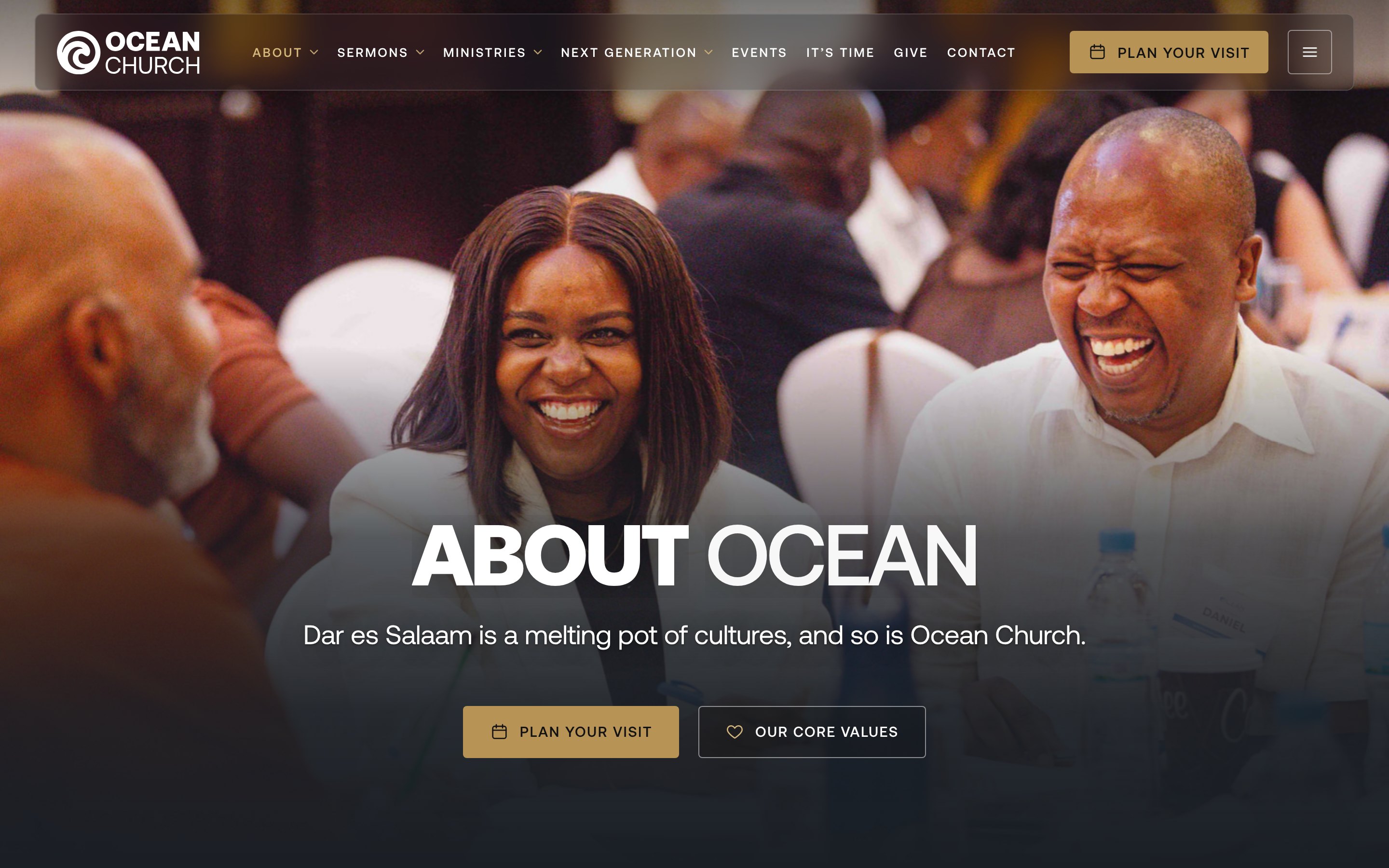
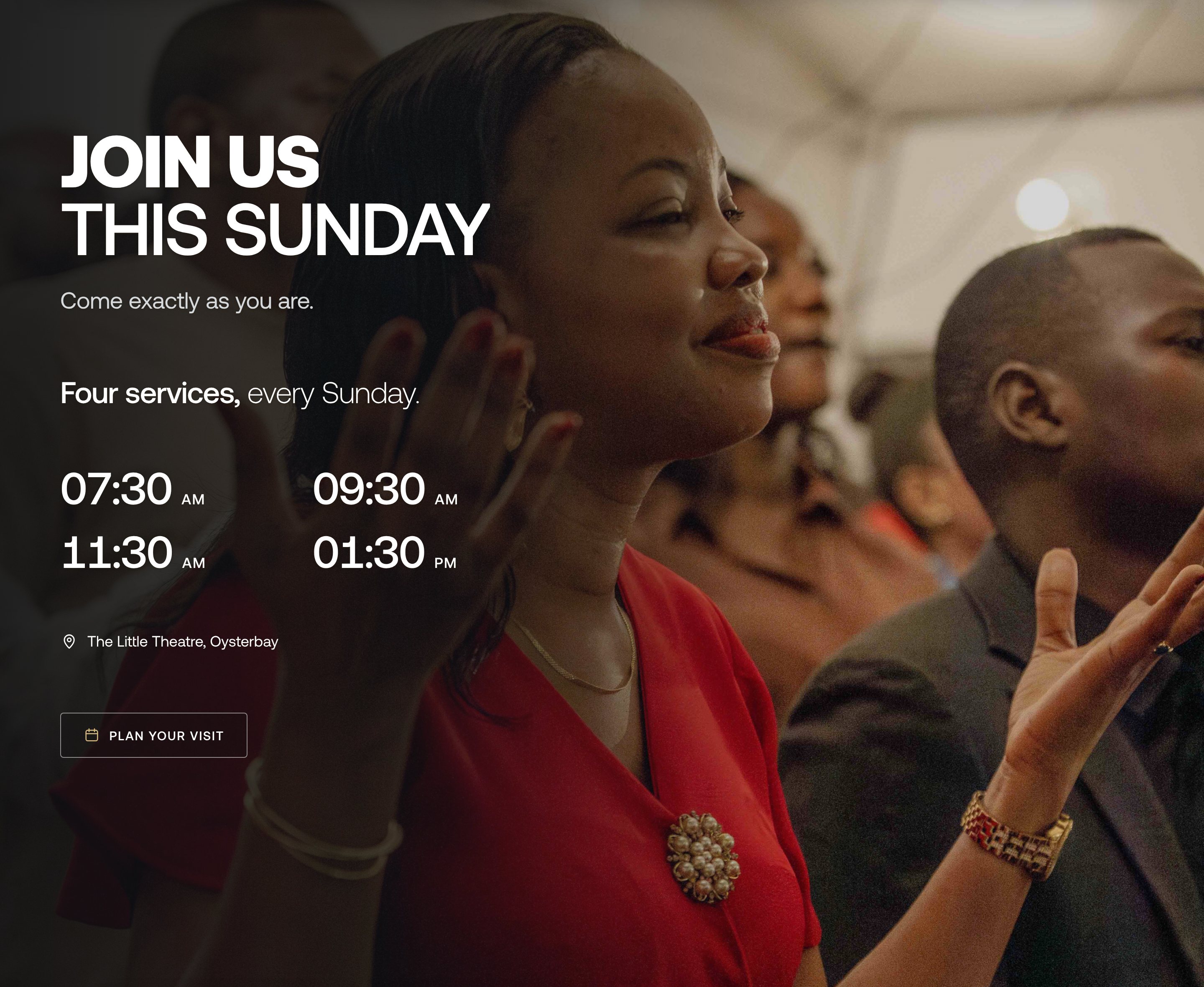
Ocean Church in Oysterbay says it clearly. Its Plan your visit page says the services last about 90 minutes and are held entirely in English, and its home page lists four Sunday services at the Little Theatre. Its About page describes a community of “locals, expats, students, and young families from all over the world”, and says the church is part of the Tanzania Assemblies of God (TAG).
In the redesign I proposed, a newcomer sees “Every Sunday” and the Little Theatre on the first screen of the phone, and “Join us this Sunday” gives the four times and the address soon after. The Plan your visit page walks through a first Sunday in five steps, from parking to a next step for people who are new.
Show the people they will meet
Names and faces help a newcomer feel they know someone before they arrive.
Braeburn’s home page opens with a welcome from its Head of School, with the head’s name and role, and carries quotes from parents, each with a name. One family writes that the school dealt with “cultural and academic integration challenges” early on. IST’s home page links to a welcome message from its director.
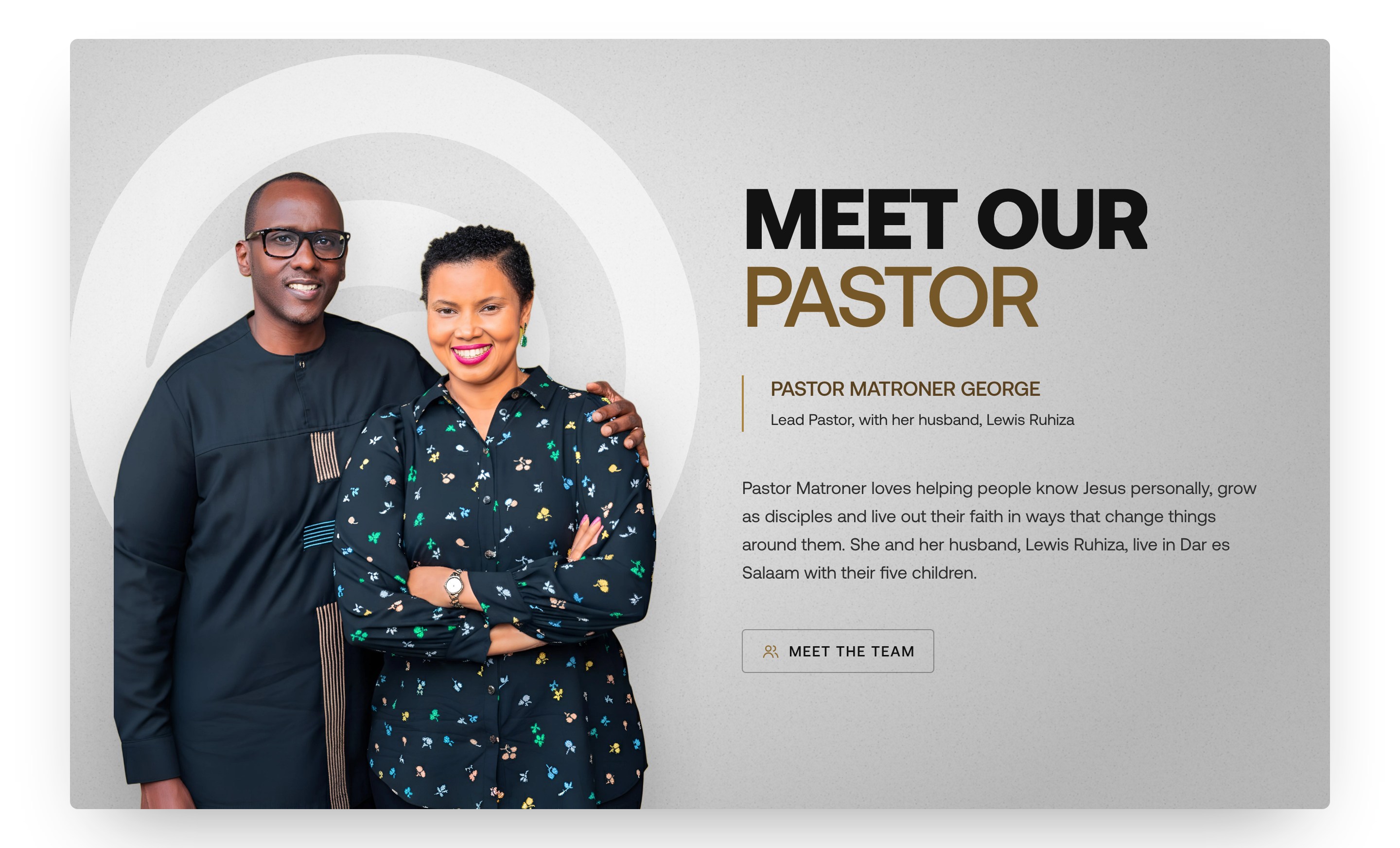
The Ocean Church redesign introduces the lead pastor with a photograph and a short paragraph.
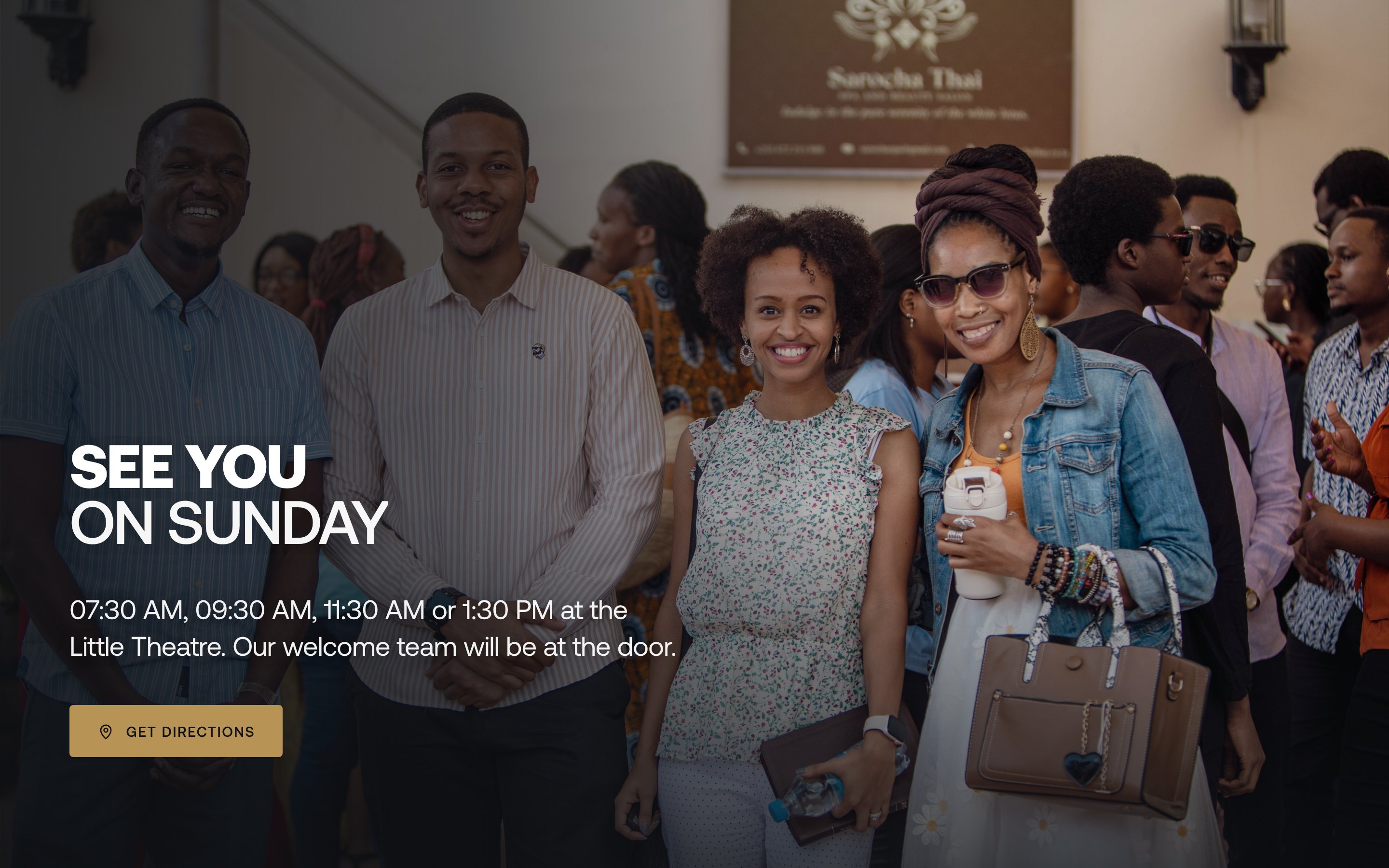
Under Beyond Sunday, prayer, women’s ministry and men’s ministry each have a photograph and one line about what happens. The home page also shows the welcome team at the door, in the first of nine Sunday photographs.

Thirteen connect groups meet in homes from Posta to Tegeta, so a newcomer can find a few people near where they live.

A newcomer checklist for your website
Read your website as someone who arrived in Dar es Salaam last week:
- The first paragraph says who you serve, in plain English.
- The address opens in Google Maps, with a landmark, parking and the door or gate to use.
- Opening hours, school hours or service times are on the first screen.
- Prices or fees are on the website, with what they include.
- A page explains the first visit or the first day, step by step.
- A family can start from abroad, by form, email, WhatsApp or video call.
- Your people have names and faces.
- Local words are explained the first time they appear.
- Payment options are listed: cards, bank transfer and mobile money.
- Everything works on a phone, on mobile data.
If you run a church, what the best church websites get right and what to put on a church website in Africa go into more detail.
Short answers for Dar es Salaam
Is there a church in Dar es Salaam with a service in English?
Yes. Ocean Church in Oysterbay holds its Sunday services in English, according to its Plan your visit page, and its home page lists four services at the Little Theatre. Check each church’s own website for its current times.
What should an international school website include for new families?
The fees and term dates, the admissions steps and how long a decision takes, how to apply from abroad, school hours, transport, uniforms and lunch, and a page about living in the city. IST and Braeburn Dar es Salaam both publish most of this on their websites.
Should a business in Dar es Salaam have a website in English or Swahili?
It depends on who your customers are. If you serve international families, write in clear, simple English. If you serve both, a website in both languages works when each version is written properly for its own readers.
Why should a school or clinic show its prices online?
A family new to the city compares costs before they choose. When the price is on the website, they can see whether it fits before they write, and the enquiries you get come from families who are ready to talk.
Can a family choose a school in Dar es Salaam from abroad?
Yes, at some schools. Braeburn Dar es Salaam offers an informal chat with the Headteacher to families who are still outside the country, and IST says its admissions steps are the same whether a family applies in person or from overseas. Check each school’s own admissions page for the details.

