Your company profile goes to a bank, a new partner or a tender panel at the end of the month. Right now it is a Word file of 30 pages, photos from three different phones and a logo copied from your website. The text is good, and the pages still look crowded.
This article is for anyone in Dar es Salaam, or anywhere in Tanzania, looking for an editorial designer for a magazine, company profile, brochure, catalogue, booklet, annual report, media kit, menu or PDF. It explains what makes a publication look expensive and what to prepare before you brief a designer. Near the end, I explain how a project runs with me.
My editorial work is clean and elegant, with space around the text and photos. I don’t do busy layouts. It suits a business that is ready to invest in how it presents itself, and I take on publications of every size, from a one-page menu to a long annual report.
What makes a company profile look expensive?
A publication looks expensive when every page follows the same plan. These are the parts I check first, on a 4-page brochure or a 60-page report.
- A grid. Every page sits on the same columns and margins, so text and photos line up from one spread to the next. A spread is the two pages you see side by side when the publication is open.
- Type. Two typefaces are usually enough. Set one size for headings, one for the main text and one for captions, and use them throughout.
- White space. Space around the text and photos shows the reader where to look first. When every corner of a page is filled, nothing on it stands out.
- Photography. Use fewer photos, and print them larger. One sharp photo across a spread often does more than six small ones. The photos should share the same light and colour, as if they came from one shoot.
- The same rules on every page. Page numbers, headings, captions and the logo sit in the same place each time. Page 24 should look like it belongs to the same company as page 2.
Paper is part of the design too. Ask your printer for samples and hold them before you choose. The weight of the cover and the finish of the paper, matt or gloss, change how the same pages feel in the hand.
Why do clean pages make people trust you?
A bank officer, a donor or a hotel guest can’t see how you run your business. They see the document you sent them. If the spacing changes from page to page, the logo is stretched or there is a spelling mistake on the cover, they start to wonder what else was rushed.
A clean layout shows that someone planned the document and checked it before it went out. That care is what you want a partner or a donor to see before they decide.
Donor publications work the same way. For The School of St Jude in Arusha, I worked on booklets on boarding, buses and teaching, the Ripple Effect impact report and the 2017 calendar. Each one turned the school’s programmes into a story a donor could follow. I was the school’s Marketing Designer from 2016 to 2017, and the three quotes in this article come from that team, from my design work before websites became my main work.
He has a strong eye for design and knows how to turn a brand into a clear finished document. The final piece was one of the best I had seen. The layout was clean, and the infographic work made the statistics easier to understand.
SUPPORTER RELATIONS ASSISTANT, THE SCHOOL OF ST JUDE
What should you prepare before you brief an editorial designer?
A complete brief saves weeks of messages. Before you write to any designer, gather these:
- What the publication is for, and who reads it. A tender panel, donors, hotel guests and advertisers each need a different first page.
- The final text, approved by the person who signs off. If the text is still being written, say so. Layout should start once the text is final, because late changes move the pages around.
- Your logo in its original format, such as AI, EPS, SVG or PDF, with your brand colours and fonts, or your brand guide if you have one.
- Photos at full size. A photo saved from social media or a chat has been made smaller, and it prints soft. Ask the photographer for the original files, and list the photos you still need.
- Figures in a spreadsheet, so they can become simple charts instead of long paragraphs of numbers.
- The format. The size (A4, A5 or square), the rough page count, print or PDF or both, how many copies, and the date you need them.
- Two or three publications you like, and what you like about each one.
- One person for feedback. When five people send comments in one WhatsApp group, the comments often disagree. One person collects them and sends a single list.
- Your budget. It sets how many pages, rounds of changes and new photos the project can cover.
How does a publication project run with me?
I’m based in Dar es Salaam and I work online, so it makes no difference whether your office is in Masaki, Arusha or Mwanza. A project runs on WhatsApp messages, voice notes and email, with Zoom or Google Meet when a video call helps.
- Brief. Send me your brief on WhatsApp at +255 769 837 573 or by email to [email protected]. Each publication is quoted after I read the brief, and the written quote confirms the price and the dates before anything is booked.
- Content. I go through the text, photos, logo files and figures, and list anything missing before the design starts.
- Art direction. I set the grid, the type, the colours and the photo style on the cover and a few sample pages. You approve the look before the rest is laid out.
- Layout. The other pages follow that plan, with the charts, captions and page numbers.
- Proofs. You check each round of PDF proofs and send your changes as one list.
- Print or PDF. You get a print file made to your printer’s needs, and a lighter PDF for email and WhatsApp.
The two files do different jobs. A print file needs bleed, which is extra picture past the edge of the page, so no thin white line shows once the paper is cut. One UK trade printer asks for 3 mm on every edge (Tradeprint, checked 4 November 2026), so ask your own printer for their figure. A print file can also be too large to email. A personal Gmail account can attach up to 25 MB, and Gmail turns anything bigger into a Google Drive link (Gmail Help, checked 4 November 2026).
Before you send the PDF to anyone, open it on your own phone and check that the main text can be read without zooming.
Before the full print run, ask your printer for one printed copy and read it in daylight. Colours on paper often look different from the screen, and this is the cheapest moment to change them.
Alan understood our communications work quickly and became a strong part of the team. He brought clear thinking, good design sense, and a steady way of working that helped us deliver stronger materials across the organisation.
COMMUNICATIONS MANAGER, THE SCHOOL OF ST JUDE

Magazines, booklets and company profiles I have worked on
From 2015 to 2017 I was Head of Editorial Design at The Adventures & Leisure Magazine, which carried travel, wildlife and hospitality stories from across Tanzania. Readership grew 15% in those years, and six issues from that time are on my portfolio.
The editorial and publications page on theascend.net also shows:
- a sponsor thank-you booklet (2017) and a sponsorship booklet (2018) for the Tanzania Tour Guide Awards, and an interview with the awards’ founder
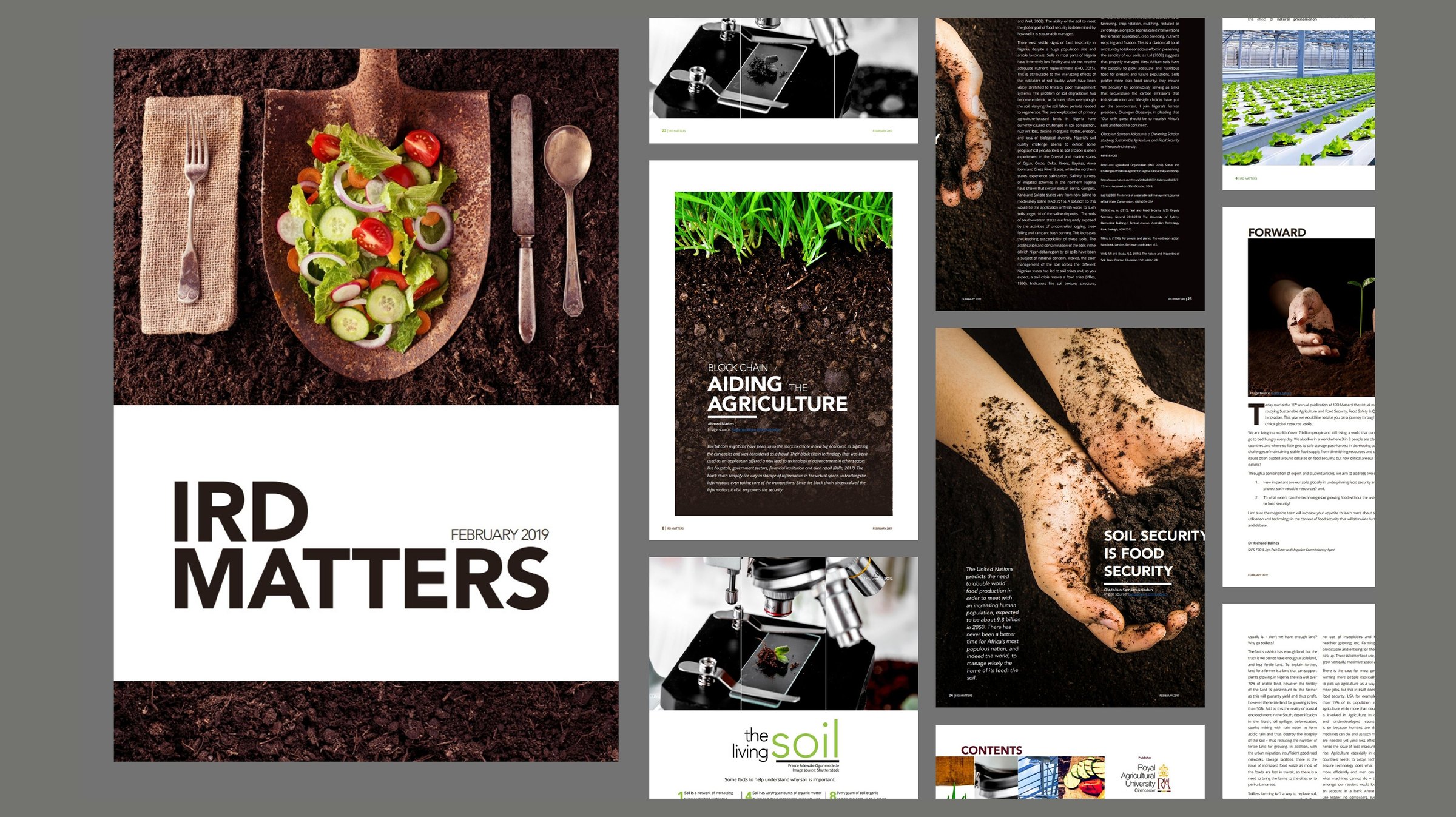
- a magazine on soil and food security (February 2019)
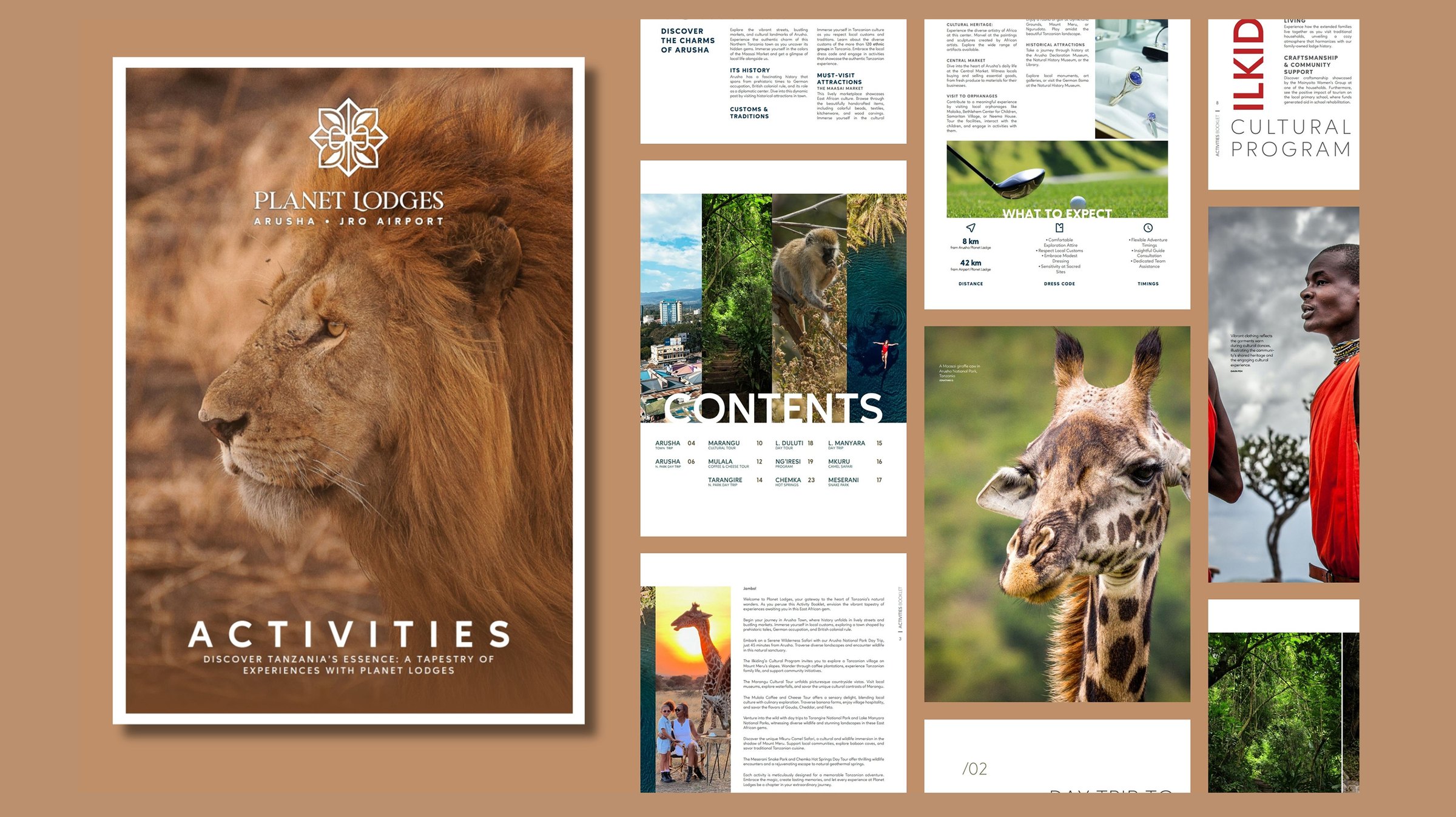
- an activities booklet for Planet Lodges and a venues and packages booklet for Rivertrees Country Inn (both 2023)
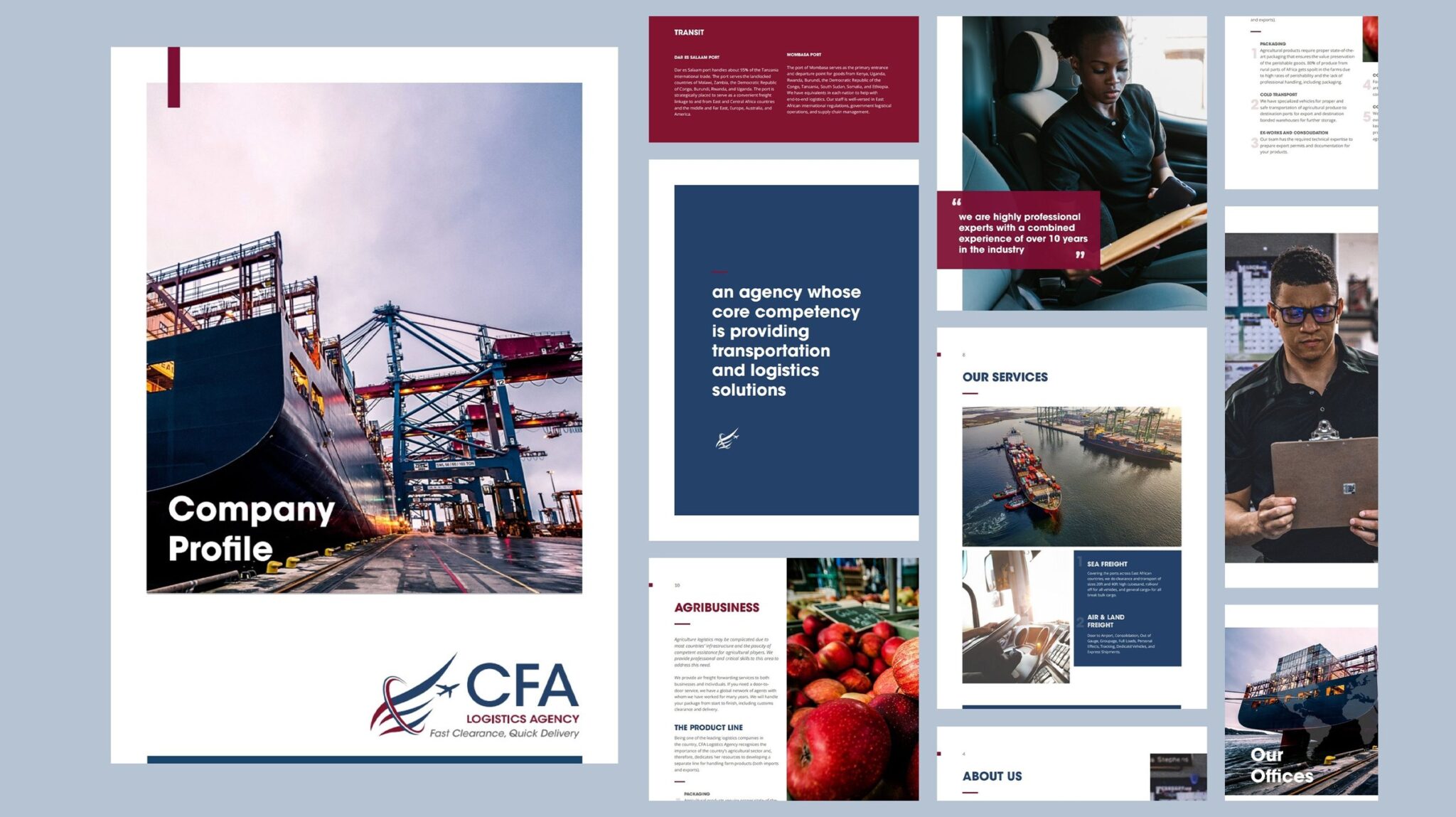
- a company profile for CFA Logistics Agency
My part changed from job to job. On some I built the layouts myself. On others I planned the content, directed the copy and reviewed the layouts until the files were ready.
During a major rebrand, Alan took briefs and turned them into finished materials that went beyond what we first expected. He worked well across the team, used design and photography with care, and delivered strong assets for the new brand.
COMMUNICATIONS & FUNDRAISING OFFICER, THE SCHOOL OF ST JUDE
If your publication is part of a bigger brand project, such as a rebrand or a photo shoot, Art direction in Tanzania explains how I direct those.
Short answers on editorial design in Dar es Salaam
What does an editorial designer do?
Plans and lays out the pages of a publication, from the grid and the type to the photos and the order of the content, so a long document is easy to read.
Should my company profile be printed or a PDF?
Often both. Print copies for meetings and events, and keep a lighter PDF for email and WhatsApp.
Do I need to meet you in person?
No. I work online, on WhatsApp messages, voice notes, email and video calls, wherever you are in Tanzania.
How is a publication priced?
After I read your brief. The page count, the photos and the date all change the price, and your budget sets what can be done.
Can you also design our website?
Yes. Websites are my main work today. How to choose a web designer in Dar es Salaam has the checks to make before you pay anyone.